Migraine Awareness Month: Understanding the Invisible Disease That Affects Millions
Tuesday, June 9th, 2026
Every June, Migraine Awareness Month shines a much-needed spotlight on one of the most common, disabling, and misunderstood neurological diseases in the world. For too long, migraine has been dismissed as “just a headache,” minimized as a minor inconvenience, or misunderstood as something a person can simply push through. The truth is far more serious.
Migraine is a complex neurological condition that can affect the brain, body, emotions, senses, work life, family life, and overall quality of life. It can cause severe head pain, nausea, vomiting, dizziness, fatigue, sensitivity to light, sound, smell, and movement, vision changes, brain fog, numbness, speech difficulty, and lingering exhaustion long after the worst pain has passed. For many people, migraine is not an occasional headache. It is a chronic, disruptive condition that can impact relationships, careers, caregiving responsibilities, mental health, and daily independence.
Migraine Awareness Month is about more than wearing a ribbon or sharing a social media post. It is about education, compassion, advocacy, and action. It is a time to recognize the millions of people who live with migraine, validate their experience, reduce stigma, and encourage better access to diagnosis, treatment, workplace support, and community understanding.

Migraine Is Not “Just a Headache”
One of the greatest barriers people with migraines face is misunderstanding. Because migraine symptoms are often invisible, many people assume the person “looks fine” and therefore must be fine. But migraine is a neurological disease, not a simple headache.
A migraine attack can involve multiple phases. Some people experience warning signs hours or even days before the head pain begins. This early stage, called the prodrome phase, may include yawning, mood changes, food cravings, neck stiffness, fatigue, trouble concentrating, frequent urination, or sensitivity to light and sound.
Some people also experience aura. Aura can include visual changes such as flashing lights, zigzag lines, blind spots, or blurred vision. It may also involve tingling, numbness, dizziness, or difficulty speaking. Aura symptoms can be frightening, especially when they happen for the first time, and should always be discussed with a healthcare professional.
The headache phase of migraine may bring throbbing or pulsing pain, often on one side of the head, but migraine can also affect both sides or shift locations. Pain may worsen with movement. Many people also experience nausea, vomiting, sensitivity to light, sensitivity to sound, sensitivity to smells, dizziness, and extreme fatigue.
After the pain improves, the attack may still not be over. The postdrome phase, often called a “migraine hangover,” can leave a person feeling drained, foggy, weak, emotional, sore, or unable to return fully to normal activities for hours or even days.
Understanding these phases helps explain why migraine can be so disruptive. It is not only the hours of pain that matter. It is the entire cycle before, during, and after the attack.
Who Is Affected by Migraine?
Migraine can affect children, teenagers, adults, and older adults. It can affect people of every background, race, income level, and profession. However, migraine is especially common in women, often influenced by hormonal changes related to menstruation, pregnancy, postpartum changes, perimenopause, or menopause.
Migraine can also run in families. If a parent or close family member lives with migraine, others in the family may be more likely to experience it as well. But even without a family history, migraine can still occur.
For some people, attacks happen occasionally. For others, migraine becomes frequent or chronic. Chronic migraine is often defined as having headaches on 15 or more days per month, with migraine features on at least 8 of those days, for more than three months. Chronic migraine can be especially disabling and often requires a more comprehensive treatment plan.
Common Migraine Triggers
Migraine triggers are not the same for everyone. A trigger does not “cause” migraine by itself, but it may help set off an attack in someone whose brain is already vulnerable to migraine.
Common triggers may include:
Stress or the letdown after stress
Sleep changes or poor sleep
Skipped meals or dehydration
Hormonal changes
Bright lights or fluorescent lighting
Strong smells
Weather or barometric pressure changes
Alcohol, especially red wine
Certain foods or food additives
Too much caffeine or caffeine withdrawal
Screen glare
Loud noise
Overexertion
Neck tension
Changes in routine
It is important to remember that triggers can be complicated. Sometimes what appears to be a trigger may actually be an early symptom of the migraine itself. For example, a person may crave chocolate during the prodrome phase and later believe chocolate caused the attack, when the craving may have been part of the attack beginning.
Keeping a migraine diary can help identify patterns. Tracking sleep, meals, hydration, stress, weather changes, menstrual cycles, symptoms, medications, and attack timing can provide valuable information for both the patient and healthcare provider.
Treatment: There Is Hope
Migraine treatment has improved significantly. While there is no universal cure, many people can reduce the frequency, severity, and disruption of migraine attacks with the right plan.
Migraine care often includes three major categories: acute treatment, preventive treatment, and lifestyle or behavioral strategies.
Acute treatments are used when an attack begins. These may include over-the-counter pain relievers, prescription migraine-specific medications such as triptans, anti-nausea medications, gepants, ditans, or other medications recommended by a healthcare provider. The goal is to treat the attack early and effectively before symptoms become more severe.
Preventive treatments are used to reduce how often attacks happen or how severe they become. Preventive options may include daily oral medications, monthly injections, quarterly infusions, Botox for chronic migraine, CGRP-targeting therapies, gepants used preventively, neuromodulation devices, and other medical approaches based on a person’s symptoms, health history, and migraine frequency.
Lifestyle and behavioral strategies may also play an important role. Regular sleep, consistent meals, hydration, stress management, exercise as tolerated, relaxation techniques, cognitive behavioral therapy, biofeedback, and avoiding known triggers can help some people manage migraine more effectively. These strategies are not a replacement for medical care, but they can be a powerful part of a complete plan.
The most important message is this: people living with migraine deserve proper diagnosis and treatment. They should not be told to simply “deal with it,” “drink more water,” or “stop stressing.” Migraine is real, and help is available.
Migraine in the Workplace
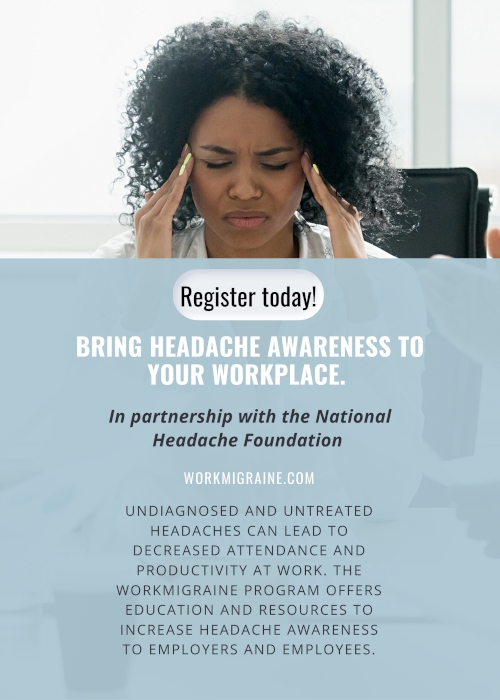
Migraine can have a major impact at work. Bright lights, computer screens, noise, strong odors, long hours, skipped meals, and high stress can all make symptoms worse. Because migraine is often invisible, employees may feel embarrassed or afraid to ask for support.
Workplace accommodations can make a meaningful difference. Helpful changes may include reducing harsh lighting, allowing screen filters or anti-glare monitors, offering flexible scheduling, allowing remote work when possible, providing access to a quiet dark space during an attack, reducing exposure to strong smells, allowing breaks for food and hydration, and supporting employees who need medical appointments.
Employers benefit when they take migraine seriously. Supportive workplaces can reduce presenteeism, absenteeism, stigma, and unnecessary suffering. A compassionate workplace culture allows employees to seek care, manage symptoms, and remain productive without feeling judged.
The Emotional Impact of Migraine
Migraine does not only affect the body. It can affect a person’s emotional well-being. People with frequent migraine may worry about when the next attack will happen. They may cancel plans, miss family events, fall behind at work, or feel guilty for needing rest. Over time, this can lead to isolation, frustration, anxiety, or depression.
The emotional burden is often made worse when others dismiss the condition. Statements like “Everyone gets headaches,” “You looked fine yesterday,” or “You just need to toughen up” can be deeply harmful. Migraine Awareness Month reminds us that compassion matters. Listening matters. Believing people matters.
Support from family, friends, coworkers, employers, and healthcare providers can make a real difference. Sometimes the most powerful thing you can say is, “I believe you. How can I help?”
When to Seek Medical Care
Anyone who experiences recurring headaches or migraine-like symptoms should talk with a healthcare professional. A proper diagnosis can help rule out other conditions and open the door to better treatment.
Emergency care is needed for a sudden, severe headache that feels like the worst headache of your life, a headache after a head injury, headache with fever or stiff neck, confusion, seizure, fainting, double vision, weakness, numbness, trouble speaking, or symptoms that feel very different from your usual migraine pattern. New aura-like symptoms should also be evaluated, especially if they have never been diagnosed before.
People should also seek medical advice if headaches are becoming more frequent, more severe, harder to treat, interfering with work or daily activities, or requiring frequent medication. Overuse of pain medication can sometimes make headaches worse over time, so a healthcare provider can help create a safer and more effective treatment plan.

How to Support Migraine Awareness Month
Migraine Awareness Month is an opportunity for everyone to help create change. You do not have to be a medical expert to make a difference.
You can learn the signs and symptoms of migraine.
You can stop calling migraine “just a headache.”
You can share accurate information.
You can encourage someone to seek care.
You can support migraine-friendly workplace policies.
You can listen without judgment.
You can advocate for better access to treatment.
You can participate in awareness events.
You can wear purple, the color commonly associated with migraine awareness.
You can share your story or amplify the stories of others.
Awareness leads to understanding. Understanding leads to compassion. Compassion leads to better care, better support, and better outcomes.
A Final Message for Migraine Awareness Month
Migraine is real. Migraine is disabling. Migraine is neurological. Migraine is often invisible, but the people living with it should never feel invisible.
This Migraine Awareness Month, let us move beyond outdated myths and make room for truth. Let us recognize the strength of those who live with migraine, the families who support them, the employers who accommodate them, and the healthcare professionals who help them find relief.
No one should have to suffer in silence. No one should have to prove their pain. No one should be dismissed because their disease cannot always be seen.
Migraine Awareness Month is a call to listen, learn, support, and advocate. Together, we can help build a world where migraine is understood, treatment is accessible, workplaces are compassionate, and every person living with migraine feels seen, heard, and supported.
5 Reasons Why People Don’t Exercise
Monday, March 30th, 2020
This May is National Physical Fitness and Sports Month. We know that exercise is such a crucial element to good health. However, approximately 70% of people in American are overweight and out of shape. Heart disease is still our number one killer and the average American spends five hours in front of a television screen daily. This wellness observance is an excellent time to promote fitness at any level and work to lessen those numbers. Here we will address some common reasons why people may not exercise and offer some suggestions to overcome them.
Reason #1. “I have no time to exercise.”

This is perhaps the most common misconception about exercise. Many of us have very busy, hectic schedules. But the reality is that what we make time for reveals our priorities. You may think you have no time to exercise, but do you have time for all the health complications that may come from a sedentary lifestyle?
Time is relative. Each of us has twenty-four hours in a day. Take a look at your daily calendar and make a note of what you actually do to fill each hour. You may not have time to devote two hours at the gym every day. However, nearly everyone has ten to twenty minutes a day. You can take a brisk walk on your lunch break or after dinner each night.
Often times we believe that if we can’t do something the “right” way or invest in it the way we think we should, we can’t do it at all. But if we truly understood the value of consistency over time, we would realize how even small efforts make a big difference. Where our health and fitness is concerned, 20 minutes a day of exercise can make all the difference in the world.
Reason #2. “I can’t afford a gym membership or personal trainer.”

With technology being what it is today, you really don’t need a gym membership to get in shape. You may still enjoy the social, community aspect of fitness. Join a Facebook group or on-line fitness group. Accountability is great, but it doesn’t have to cost money. Even meeting up with a friend can be a great way to stay motivated and get healthy together.
There are plenty of workout videos for free on platforms like YouTube and Pinterest. Find your favorite fitness blogger to follow on Instagram for diet and exercise tips and programs. The number of resources is plenty, but that can also be overwhelming, especially to a beginner. Start small and go from there. Perhaps choose one workout plan or video to stick with first and then branch out as you progress in your fitness.
You don’t really even need technology or a gym. Just get outside and move your body! Have a private dance party in your own bedroom, play a game of basketball, go for a swim. The main idea is just to get up and move every single day. Get your heart-rate up and build muscle. Your body will thank you for it.
Reason #3. “I have bad knees/back/other health issues.”

It’s certainly a legitimate concern when you have underlying health issues that make it more challenging to exercise. However, it’s only more detrimental to your health to let them stop you. Be sure to consult your doctor about what exercise may be beneficial to you. Do you have bad joints? Exercises like walking, the elliptical machine or swimming may be your best options. There are even some seated workouts available.
Don’t hesitate to modify strength training exercises to fit your needs. When you are carrying a lot of extra weight, it can be difficult to perform certain exercises. Modification is a great way to get started. Gradually, as your fitness level improves, you may not need to modify. Many of your current health issues may even disappear as your habit of exercise increases your overall health.
Reason #4. “I have too much weight to lose. It won’t make much of a difference.”
It can be overwhelming to start an exercise program when you feel you have so far to go. Set small, incremental goals for yourself. Don’t expect changes in your body overnight. Your main goal in creating a habit of exercise should be just that – creating a habit. Exercise is part of a lifestyle. Losing weight or gaining muscle can be great benefits, but they should always come secondary to your health.
Take it one day a time and celebrate what your body is capable of doing! When you exercise, it isn’t to punish yourself for eating poorly. Exercise is a way to care for your body and your health.
Maybe you’re already thin and think you don’t need exercise. Thin does not equal healthy! Your heart and lungs still need exercise. Exercise is not about weight, but about health.
Reason #5. “I just don’t like to exercise.”

Maybe you genuinely just don’t like exercise. That’s fair! But if you don’t like to do something, it is very easy to find reasons not to do it. If you don’t like an exercise, don’t do it! Find something you do like to do. Don’t like running? Don’t run. Simply walk or ride a bike. Take a dance class or take up yoga. You have plenty of options to choose from. Exercise can be fun! You just have to find the right fit for you. The more you enjoy it, the more likely you are to stick with it!
Visit our National Wellness Calendar to learn more about National Physical Fitness and Sports month.
Read our Wellness Blog on Promoting Observances in your workplace.
10 Healthy Meals for Your Work Week
Monday, January 20th, 2020
We all know we should eat more healthily. Many of us simply don’t have the time it takes to plan and prepare healthy meals. We want to help you take the guesswork out of what to eat this week. We’ve gathered 5 healthy, easy to prep and pack for work lunches and 5 fast, easy and delicious dinners for each work night this week. That’s 10 healthy meals for your workweek.
Healthy Lunches to Pack for Work
- Hummus and Veggie Wraps – These are a great, tasty way to get in extra veggies. Use whatever veggies you have on hand. You’ll get extra protein from the hummus and by adding some deli meat or grilled chicken. Switch out white flour tortillas for some whole wheat or low carb options to increase your nutrients.

Photo belongs to laurenslatest.com
- Deli Snack Box – The options are truly endless when it comes to creating a deli snack box. Include a veggie, fruit, cheese, protein, and carb. These snack boxes are light while still being filling and full of variety, color, and good nutrition.

Deli snack boxes can be as varied and unique as the people who eat them.
- Kale Salad – If you’ve never tried a Kale Salad, you’re really missing out. Massage some olive oil into the leaves to soften them, add some lemon juice, slivered almonds, dried cranberries, and parmesan and you’ve got a delicious meal. Throw on some shredded chicken for some filling protein to round it out.

This Kale Salad uses quinoa as a great addition of protein and complex carbs.
- Tuna Salad Lettuce Wraps – Tuna salad is always a great go-to healthy lunch option. Wrapping it in lettuce instead of bread is a perfect way to reduce your simple carb intake and avoid that afternoon carb crash. If you’re trying to cut down on fat, try this mayo-free rendition of tuna salad, full of flavor.

Photo belongs to projectmealplan.com
- Burrito Bowl – Rather than head to your favorite burrito bowl restaurant, save ten bucks by packing your own! You’ll save money and calories by building your own, simple burrito bowl.

Photo belongs to everydaymealprep.com
Easy, Healthy Weeknight Dinners
- Burger Bowls – Burger bowls are a super easy, fast, low carb meal to throw together on a weeknight. Grab a bag of sweet potato chips or frozen sweet potato fries as a low maintenance side item.

Photo belongs to thehoneyblonde.com
- One Pan Balsamic Chicken – Any recipe with “one pan” in the title is a winner! Easy preparation and easy cleanup. This delicious 30-minute dinner from Better Homes & Gardens is sure to be a favorite.

Photo belongs to bhg.com /Jason Donnelly
- Slow Cooker Stuffed Pepper Soup – This soup is our only slow cooker meal on the list, so it does require a little extra prep work. It’s still super simple and easy and once you’ve thrown it all in, it can cook away while you’re at work. The soup also makes great leftovers for lunches the next day.

Photo belongs to recipesthatcrock.com
- Avocado Salmon Rice Bowl – Here’s a meal that’s full of healthy fats and omega-3s. You can purchase bags of frozen salmon fairly inexpensively. You can also swap the white rice for brown or even buy a bag of frozen cauliflower rice to increase nutrient density.

Photo belongs to willcookforsmiles.com
- Cauliflower Crust Veggie Pizza – You can purchase a frozen cauliflower pizza crust in your local grocer’s freezer section. Sometimes they even come with two crusts in a box! Add some pizza sauce and your favorite toppings for a healthy variation on pizza night.

Add extra veggies to pack in even more nutrients into this guilt-free pizza!
March is National Nutrition Month! Visit our Wellness Calendar for a free download of the upcoming Wellness Observances. If you’re interested in hosting a health fair at your workplace, check out our FREE planning tools. If you’re a healthcare provider, register a booth at a health fair near you!