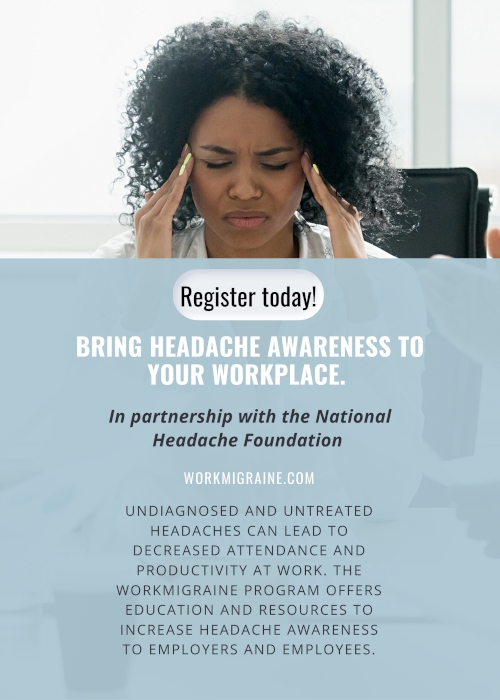
Migraine Awareness Month: Understanding the Invisible Disease That Affects Millions
Tuesday, June 9th, 2026
Every June, Migraine Awareness Month shines a much-needed spotlight on one of the most common, disabling, and misunderstood neurological diseases in the world. For too long, migraine has been dismissed as “just a headache,” minimized as a minor inconvenience, or misunderstood as something a person can simply push through. The truth is far more serious.
Migraine is a complex neurological condition that can affect the brain, body, emotions, senses, work life, family life, and overall quality of life. It can cause severe head pain, nausea, vomiting, dizziness, fatigue, sensitivity to light, sound, smell, and movement, vision changes, brain fog, numbness, speech difficulty, and lingering exhaustion long after the worst pain has passed. For many people, migraine is not an occasional headache. It is a chronic, disruptive condition that can impact relationships, careers, caregiving responsibilities, mental health, and daily independence.
Migraine Awareness Month is about more than wearing a ribbon or sharing a social media post. It is about education, compassion, advocacy, and action. It is a time to recognize the millions of people who live with migraine, validate their experience, reduce stigma, and encourage better access to diagnosis, treatment, workplace support, and community understanding.

Migraine Is Not “Just a Headache”
One of the greatest barriers people with migraines face is misunderstanding. Because migraine symptoms are often invisible, many people assume the person “looks fine” and therefore must be fine. But migraine is a neurological disease, not a simple headache.
A migraine attack can involve multiple phases. Some people experience warning signs hours or even days before the head pain begins. This early stage, called the prodrome phase, may include yawning, mood changes, food cravings, neck stiffness, fatigue, trouble concentrating, frequent urination, or sensitivity to light and sound.
Some people also experience aura. Aura can include visual changes such as flashing lights, zigzag lines, blind spots, or blurred vision. It may also involve tingling, numbness, dizziness, or difficulty speaking. Aura symptoms can be frightening, especially when they happen for the first time, and should always be discussed with a healthcare professional.
The headache phase of migraine may bring throbbing or pulsing pain, often on one side of the head, but migraine can also affect both sides or shift locations. Pain may worsen with movement. Many people also experience nausea, vomiting, sensitivity to light, sensitivity to sound, sensitivity to smells, dizziness, and extreme fatigue.
After the pain improves, the attack may still not be over. The postdrome phase, often called a “migraine hangover,” can leave a person feeling drained, foggy, weak, emotional, sore, or unable to return fully to normal activities for hours or even days.
Understanding these phases helps explain why migraine can be so disruptive. It is not only the hours of pain that matter. It is the entire cycle before, during, and after the attack.
Who Is Affected by Migraine?
Migraine can affect children, teenagers, adults, and older adults. It can affect people of every background, race, income level, and profession. However, migraine is especially common in women, often influenced by hormonal changes related to menstruation, pregnancy, postpartum changes, perimenopause, or menopause.
Migraine can also run in families. If a parent or close family member lives with migraine, others in the family may be more likely to experience it as well. But even without a family history, migraine can still occur.
For some people, attacks happen occasionally. For others, migraine becomes frequent or chronic. Chronic migraine is often defined as having headaches on 15 or more days per month, with migraine features on at least 8 of those days, for more than three months. Chronic migraine can be especially disabling and often requires a more comprehensive treatment plan.
Common Migraine Triggers
Migraine triggers are not the same for everyone. A trigger does not “cause” migraine by itself, but it may help set off an attack in someone whose brain is already vulnerable to migraine.
Common triggers may include:
Stress or the letdown after stress
Sleep changes or poor sleep
Skipped meals or dehydration
Hormonal changes
Bright lights or fluorescent lighting
Strong smells
Weather or barometric pressure changes
Alcohol, especially red wine
Certain foods or food additives
Too much caffeine or caffeine withdrawal
Screen glare
Loud noise
Overexertion
Neck tension
Changes in routine
It is important to remember that triggers can be complicated. Sometimes what appears to be a trigger may actually be an early symptom of the migraine itself. For example, a person may crave chocolate during the prodrome phase and later believe chocolate caused the attack, when the craving may have been part of the attack beginning.
Keeping a migraine diary can help identify patterns. Tracking sleep, meals, hydration, stress, weather changes, menstrual cycles, symptoms, medications, and attack timing can provide valuable information for both the patient and healthcare provider.
Treatment: There Is Hope
Migraine treatment has improved significantly. While there is no universal cure, many people can reduce the frequency, severity, and disruption of migraine attacks with the right plan.
Migraine care often includes three major categories: acute treatment, preventive treatment, and lifestyle or behavioral strategies.
Acute treatments are used when an attack begins. These may include over-the-counter pain relievers, prescription migraine-specific medications such as triptans, anti-nausea medications, gepants, ditans, or other medications recommended by a healthcare provider. The goal is to treat the attack early and effectively before symptoms become more severe.
Preventive treatments are used to reduce how often attacks happen or how severe they become. Preventive options may include daily oral medications, monthly injections, quarterly infusions, Botox for chronic migraine, CGRP-targeting therapies, gepants used preventively, neuromodulation devices, and other medical approaches based on a person’s symptoms, health history, and migraine frequency.
Lifestyle and behavioral strategies may also play an important role. Regular sleep, consistent meals, hydration, stress management, exercise as tolerated, relaxation techniques, cognitive behavioral therapy, biofeedback, and avoiding known triggers can help some people manage migraine more effectively. These strategies are not a replacement for medical care, but they can be a powerful part of a complete plan.
The most important message is this: people living with migraine deserve proper diagnosis and treatment. They should not be told to simply “deal with it,” “drink more water,” or “stop stressing.” Migraine is real, and help is available.
Migraine in the Workplace
Migraine can have a major impact at work. Bright lights, computer screens, noise, strong odors, long hours, skipped meals, and high stress can all make symptoms worse. Because migraine is often invisible, employees may feel embarrassed or afraid to ask for support.
Workplace accommodations can make a meaningful difference. Helpful changes may include reducing harsh lighting, allowing screen filters or anti-glare monitors, offering flexible scheduling, allowing remote work when possible, providing access to a quiet dark space during an attack, reducing exposure to strong smells, allowing breaks for food and hydration, and supporting employees who need medical appointments.
Employers benefit when they take migraine seriously. Supportive workplaces can reduce presenteeism, absenteeism, stigma, and unnecessary suffering. A compassionate workplace culture allows employees to seek care, manage symptoms, and remain productive without feeling judged.
The Emotional Impact of Migraine
Migraine does not only affect the body. It can affect a person’s emotional well-being. People with frequent migraine may worry about when the next attack will happen. They may cancel plans, miss family events, fall behind at work, or feel guilty for needing rest. Over time, this can lead to isolation, frustration, anxiety, or depression.
The emotional burden is often made worse when others dismiss the condition. Statements like “Everyone gets headaches,” “You looked fine yesterday,” or “You just need to toughen up” can be deeply harmful. Migraine Awareness Month reminds us that compassion matters. Listening matters. Believing people matters.
Support from family, friends, coworkers, employers, and healthcare providers can make a real difference. Sometimes the most powerful thing you can say is, “I believe you. How can I help?”
When to Seek Medical Care
Anyone who experiences recurring headaches or migraine-like symptoms should talk with a healthcare professional. A proper diagnosis can help rule out other conditions and open the door to better treatment.
Emergency care is needed for a sudden, severe headache that feels like the worst headache of your life, a headache after a head injury, headache with fever or stiff neck, confusion, seizure, fainting, double vision, weakness, numbness, trouble speaking, or symptoms that feel very different from your usual migraine pattern. New aura-like symptoms should also be evaluated, especially if they have never been diagnosed before.
People should also seek medical advice if headaches are becoming more frequent, more severe, harder to treat, interfering with work or daily activities, or requiring frequent medication. Overuse of pain medication can sometimes make headaches worse over time, so a healthcare provider can help create a safer and more effective treatment plan.

How to Support Migraine Awareness Month
Migraine Awareness Month is an opportunity for everyone to help create change. You do not have to be a medical expert to make a difference.
You can learn the signs and symptoms of migraine.
You can stop calling migraine “just a headache.”
You can share accurate information.
You can encourage someone to seek care.
You can support migraine-friendly workplace policies.
You can listen without judgment.
You can advocate for better access to treatment.
You can participate in awareness events.
You can wear purple, the color commonly associated with migraine awareness.
You can share your story or amplify the stories of others.
Awareness leads to understanding. Understanding leads to compassion. Compassion leads to better care, better support, and better outcomes.
A Final Message for Migraine Awareness Month
Migraine is real. Migraine is disabling. Migraine is neurological. Migraine is often invisible, but the people living with it should never feel invisible.
This Migraine Awareness Month, let us move beyond outdated myths and make room for truth. Let us recognize the strength of those who live with migraine, the families who support them, the employers who accommodate them, and the healthcare professionals who help them find relief.
No one should have to suffer in silence. No one should have to prove their pain. No one should be dismissed because their disease cannot always be seen.
Migraine Awareness Month is a call to listen, learn, support, and advocate. Together, we can help build a world where migraine is understood, treatment is accessible, workplaces are compassionate, and every person living with migraine feels seen, heard, and supported.
5 Reasons Why People Don’t Exercise
Monday, March 30th, 2020
This May is National Physical Fitness and Sports Month. We know that exercise is such a crucial element to good health. However, approximately 70% of people in American are overweight and out of shape. Heart disease is still our number one killer and the average American spends five hours in front of a television screen daily. This wellness observance is an excellent time to promote fitness at any level and work to lessen those numbers. Here we will address some common reasons why people may not exercise and offer some suggestions to overcome them.
Reason #1. “I have no time to exercise.”

This is perhaps the most common misconception about exercise. Many of us have very busy, hectic schedules. But the reality is that what we make time for reveals our priorities. You may think you have no time to exercise, but do you have time for all the health complications that may come from a sedentary lifestyle?
Time is relative. Each of us has twenty-four hours in a day. Take a look at your daily calendar and make a note of what you actually do to fill each hour. You may not have time to devote two hours at the gym every day. However, nearly everyone has ten to twenty minutes a day. You can take a brisk walk on your lunch break or after dinner each night.
Often times we believe that if we can’t do something the “right” way or invest in it the way we think we should, we can’t do it at all. But if we truly understood the value of consistency over time, we would realize how even small efforts make a big difference. Where our health and fitness is concerned, 20 minutes a day of exercise can make all the difference in the world.
Reason #2. “I can’t afford a gym membership or personal trainer.”

With technology being what it is today, you really don’t need a gym membership to get in shape. You may still enjoy the social, community aspect of fitness. Join a Facebook group or on-line fitness group. Accountability is great, but it doesn’t have to cost money. Even meeting up with a friend can be a great way to stay motivated and get healthy together.
There are plenty of workout videos for free on platforms like YouTube and Pinterest. Find your favorite fitness blogger to follow on Instagram for diet and exercise tips and programs. The number of resources is plenty, but that can also be overwhelming, especially to a beginner. Start small and go from there. Perhaps choose one workout plan or video to stick with first and then branch out as you progress in your fitness.
You don’t really even need technology or a gym. Just get outside and move your body! Have a private dance party in your own bedroom, play a game of basketball, go for a swim. The main idea is just to get up and move every single day. Get your heart-rate up and build muscle. Your body will thank you for it.
Reason #3. “I have bad knees/back/other health issues.”

It’s certainly a legitimate concern when you have underlying health issues that make it more challenging to exercise. However, it’s only more detrimental to your health to let them stop you. Be sure to consult your doctor about what exercise may be beneficial to you. Do you have bad joints? Exercises like walking, the elliptical machine or swimming may be your best options. There are even some seated workouts available.
Don’t hesitate to modify strength training exercises to fit your needs. When you are carrying a lot of extra weight, it can be difficult to perform certain exercises. Modification is a great way to get started. Gradually, as your fitness level improves, you may not need to modify. Many of your current health issues may even disappear as your habit of exercise increases your overall health.
Reason #4. “I have too much weight to lose. It won’t make much of a difference.”
It can be overwhelming to start an exercise program when you feel you have so far to go. Set small, incremental goals for yourself. Don’t expect changes in your body overnight. Your main goal in creating a habit of exercise should be just that – creating a habit. Exercise is part of a lifestyle. Losing weight or gaining muscle can be great benefits, but they should always come secondary to your health.
Take it one day a time and celebrate what your body is capable of doing! When you exercise, it isn’t to punish yourself for eating poorly. Exercise is a way to care for your body and your health.
Maybe you’re already thin and think you don’t need exercise. Thin does not equal healthy! Your heart and lungs still need exercise. Exercise is not about weight, but about health.
Reason #5. “I just don’t like to exercise.”

Maybe you genuinely just don’t like exercise. That’s fair! But if you don’t like to do something, it is very easy to find reasons not to do it. If you don’t like an exercise, don’t do it! Find something you do like to do. Don’t like running? Don’t run. Simply walk or ride a bike. Take a dance class or take up yoga. You have plenty of options to choose from. Exercise can be fun! You just have to find the right fit for you. The more you enjoy it, the more likely you are to stick with it!
Visit our National Wellness Calendar to learn more about National Physical Fitness and Sports month.
Read our Wellness Blog on Promoting Observances in your workplace.
How to Bring Wellness to Your Workplace
Tuesday, February 11th, 2020
IAB Health Productions was founded as a tool to bring Wellness into the Workplace. We believe wellness education is important, given the amount of time individuals spend in the workplace and the impact health has on employee performance and associated benefits cost. At IAB, we promote workplace wellness in various ways: through our corporate health fairs across the nation, our National Wellness Calendar downloads, monthly Wellness Newsletter, blog posts, and a variety of social media platforms.
We utilize our social media accounts to highlight wellness observances and promote our health fair events to vendors. But how can you make the most of them? Here are some ways that you can achieve Wellness in your Workplace.
2022 Wellness Observance Calendar
We provide perhaps the most comprehensive list of Wellness Observances and resources available on the internet. Each year it is updated with new links and information to benefit you most.
We highly recommend staying ahead of the curve and planning the observances you want to highlight in your office setting. Not every observance will be relevant to every place of employment, but there is plenty to choose from.
Many of the resources listed have posters and infographics available. These are excellent tools for your workplace education that you can post on bulletin boards and in break rooms. Think of common areas where employees will frequently see the information and be able to apply it to their personal health.

Downloading our Wellness Calendar will also give you access to our monthly email newsletter. Newsletters highlight upcoming wellness observances a month in advance, giving you plenty of time to gather resources and information for your employees. We’ll also provide links to relevant wellness blog posts that include in-depth information about carefully selected wellness topics.
Utilize our Free Health Fair Planning Tools
 As an employer or broker for a company, you are eligible to use our FREE health fair planning tools. Corporate events of any kind can be time-consuming and exhausting to plan. From the very beginning of IAB’s inception, we’ve done our best to simplify that process for you.
Rather than spending time hunting down appropriate vendor booths for your Health Fair, we take care of promoting the event and capitalizing on relationships with vendors that we’ve already built. You’ll also have the option to use some tried and true vendors that you know you want, and approve or deny any who apply to participate.
Once you’ve registered your free account with us, you’ll receive personalized instructions on how to move forward in the process. We’ll help you every step of the way. There is no charge to you for these services. The fees paid by the vendors cover those costs.

Many of our Vendors also offer Health and Wellness Workshops that can be offered on-site at your workplace. We have a database available for you to search for desired health topics and instructors.
Share Information
You can locate IAB Health Productions on Facebook, Instagram, Twitter, and LinkedIn. We post about each upcoming event that is accepting vendors, giving opportunities for multiple health care providers in each area to participate. We also emphasize important Wellness Observances each month, linking to Wellness Blogs and our Wellness Calendar.

These observance posts are always filled with key information about the importance of each specific issue. The posts are easy to share and a great reminder for what’s being talked about in the health and wellness arena at that particular time of year.
Our main goal is in bringing Wellness to the Workplace. We want to make sure that you are equipped with as many resources and opportunities as we can possibly provide. We welcome your feedback! How can we do more to help you spread awareness in your place of employment? IAB is always seeking new and effective ways to help people stay healthy and informed.
Common Reasons to Visit a Pediatric ENT
Saturday, December 28th, 2019
This February, we observe Kid’s ENT Health Month. Children experience a myriad of ear, nose and throat illnesses like ear infections, sinus infections, asthma, allergies, even hearing and speech delays. Many of these issues may be initially handled by your child’s pediatrician. But recurrent illness may need to be referred to your local Pediatric ENT.
Children’s Ear, Nose and Throat Issues

Tongue Tie
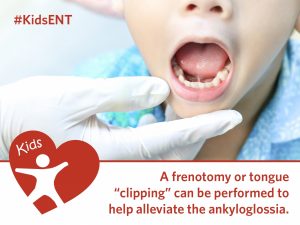
From the time of birth, children may need the expertise of an ENT. Last year, we focused on spreading awareness about ankyloglossia, or tongue tie. As infants, children may struggle to breastfeed or even bottle feed due to ankyloglossia, which hinders the movement of the tongue. Increased awareness over the last 20 years has led parents to ENTs to perform a simple corrective surgery called a frenotomy. This in-office procedure has a quick recovery time with a very low risk of complications.
Tympanostomy Tubes
Some children have repeated difficulty with ear infections. With frequent or lengthy bouts of ear infection, your pediatrician may refer you to an ENT for Tympanostomy tubes. Built-up fluid in the ears can lead to temporary hearing loss as well as discomfort. The procedure involves drilling a small hole in the eardrum, suctioning out whatever fluid may be trapped there, and inserting a small tube. These tubes allow air to reach the middle ear, providing relief from the built-up pressure.
Snoring and Sleep Apnea
Mouth breathing or snoring in children are other indications that a trip to the ENT may be necessary. Nasal obstructions can lead to blocked airways that hinder a child’s breathing. This can exhibit itself as noisy breathing, a runny nose and sleeping with the mouth open. There are various causes for these obstructions such as swelling from allergies or infections, a foreign object, or a deviated septum. Your pediatric ENT will be able to assess the cause and proceed with the proper treatment.

Children who snore experience what’s termed Sleep Disordered Breathing. Two to four percent of those children who snore also experience Obstructive Sleep Apnea. With Sleep apnea, the airways are completely obstructed for a brief period of time, causing the body to behave as though it’s choking. Blood oxygen levels drop, blood pressure rises and sleep is disrupted.
Snoring in children can usually be attributed to enlarged tonsils or adenoids. In children who are overweight, it may be due to fat deposits that gather around the throat and thus narrow the airway. All children who snore experience some level of disrupted sleep.
Improper breathing at night causes poor sleep quality, which can lead to other problems. Irritability, mood swings, hyperactivity, and slow growth can all be attributed to insufficient sleep due to poor sleep quality.
For all these ailments and so many others, we value our Pediatric Ear, Nose and Throat Doctors. Visit our National Wellness Observance Calendar to view other resources on Kids ENT Health to help educate you and your workplace. Our 2020 National Wellness Observance Calendar is Free to Download, so you can stay up to date on other important health observances throughout the year.
How to Age Gracefully
Friday, September 6th, 2019

Age is just a number, they tell us. But it seems we’re getting older, younger and younger. Some twenty-somethings feel as though they’re pushing sixty. How do we keep our minds and bodies in tip-top shape as we age? Are the aches, pains and ailments just inevitable? Let’s discuss how to age gracefully. Hopefully, you’ll find a new lease on life in the paragraphs that follow.
Eat A Balanced Diet
This first tip is a simple one. It’s used so frequently, it may seem trite. But the simplicity and importance of eating a balanced diet cannot be overestimated. With all the fad diets and extreme restrictions out there, balance can be hard to come by. The fads will come and go. There is no one food group that can be termed “bad.” Most everything has a benefit in moderation.

Don’t deprive yourself of good foods that you like to eat. Just eat more fruits, veggies, lean meats and whole grains. Even carbohydrates are important. It can be tempting for weight loss to eliminate carbs almost entirely. Just like carbs are important, many healthy fats are rich in Omega vitamins essential for good heart and brain health.
Some people do have to monitor carbs more closely for other health concerns. But an extreme diet can deprive your body of nutrients it actually needs. While you may experience weight loss in the short term, what’s most important? Losing weight quickly, right now? Or sustaining a healthy, balanced diet over time that will lead to a healthy weight in addition to a long healthy life.
Move Your Body
Never stop moving your body. A body at rest remains at rest. Muscles that aren’t used deteriorate over time. That can lead to your body ceasing to function and move the way it used to. Simple walking and daily stretching can do wonders for your cardiovascular and muscle health. Getting your heart rate up and releasing those feel-good endorphins fights a world of health issues.

Studies have shown that older adults who maintain active, healthy lifestyles, are 60% less likely to develop dementia. The way you treat your body affects your mind, just as the way you treat your mind affects your body. The mind-body connection is a powerful thing.
Think Youthful Thoughts
Our mental health contributes much more to our overall health than you might think. There are many who are dead long before their bodies are buried. Don’t be one of them! Live your life to the fullest. Make plans, set new goals, dream new dreams. As long as you have breath you have a purpose to fulfill. Meditation or Prayer has even shown to improve age-related memory loss. Meditation can contribute to your physical and emotional health by decreasing stress and improving mental clarity.

Invest in our youth! Mentor someone younger than you. Volunteer with after school programs or be a big brother/sister. Being around young people keeps you dialed in and aware. We tend to be most like the people we spend time around. Keeping our associations varied opens our minds to learning new things. Learning new things keeps our minds healthy.
Sharpen and challenge your mind to think. When you cease to learn, you cease to truly live. Take up a new hobby or audit a college course. An endless supply of knowledge can be found simply by taking up the habit of reading. When you continue to utilize your thinker, you guard yourself against dementia and strengthen your mind.
Wear Your Sunscreen
Your skin is your largest organ. Don’t neglect to take care of it! It’s the first thing people see and one of the biggest indicators of your age. Sun damage to your skin is a huge cause of aging. Not only does it age your skin, but you also run the risk of developing skin cancer. Skin cancer takes many lives every single year.
Never underestimate the impact of a good skincare routine, both for men and women. Begin your preventative care as young as age 25. The damage done to our skin only shows up about ten years after it occurs. Be diligent in your skincare routine and you will see a marked difference in your youthful appearance.

For women, it’s important to use a cleanser, toner, eye cream, treatment product (anti-wrinkle or brightener) moisturizer, and exfoliate regularly. Men tend to exfoliate and moisturize the lower portion of their face through shaving. They show their age on their forehead and around their eyes. Daily sunscreen in addition to an equally good skincare routine is just as important for men.
Own it!
Don’t fight the aging process, embrace it. You’ve earned your age and you have the wisdom and life experience to prove it. Every new day is a gift. You’ve been given this life and this body and it’s up to you what you do with them. Take care of yourself, whether you’re 22 or 92. None of us lives forever, but let’s live well.