Every September, Suicide Prevention Awareness Month provides an opportunity to bring an often difficult subject into the light.
It is a time to remember those whose lives have been lost to suicide, support people who have struggled with suicidal thoughts, acknowledge the families and communities affected, and remind one another that help, treatment and hope are available.
Suicide prevention is not only the responsibility of mental health professionals. Friends, family members, coworkers, managers and communities can all play a role by creating stronger connections, recognizing when someone may be struggling and helping people reach appropriate support.
Sometimes the most meaningful first step is simply letting another person know:
I see you. I care about you. You don’t have to face this alone.
Know the Warning Signs
Emotional distress does not always look the same from one person to another. Someone may appear sad and withdrawn, while another person may seem angry, anxious or unusually restless.
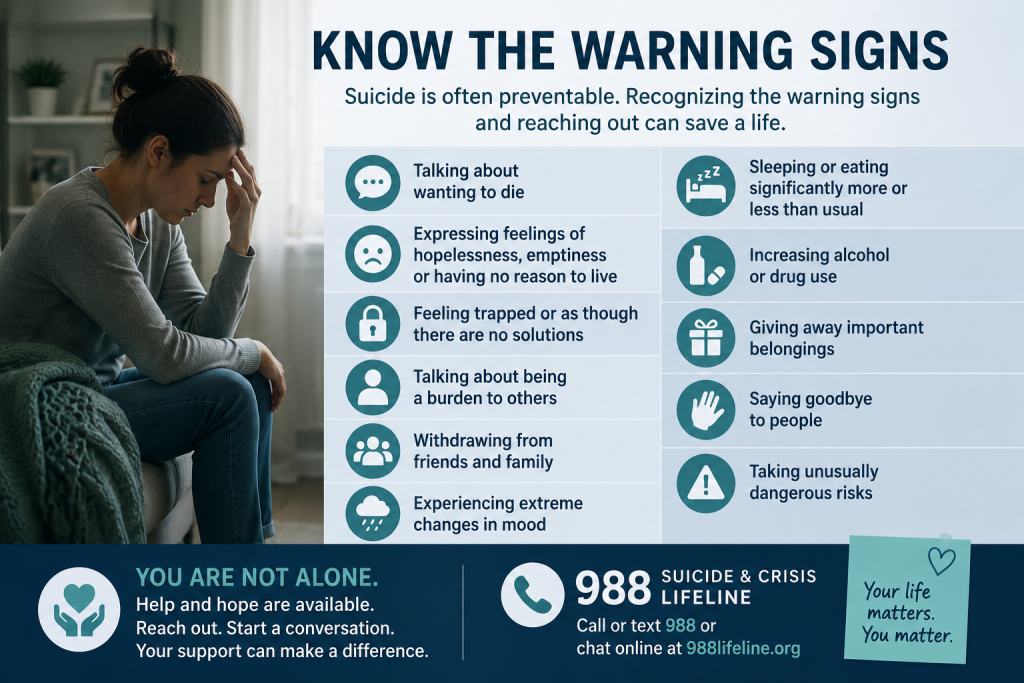
The National Institute of Mental Health identifies a number of warning signs that can indicate someone may be experiencing suicidal thoughts. These can include:
Talking about wanting to die
Expressing feelings of hopelessness, emptiness or having no reason to live
Feeling trapped or as though there are no solutions
Talking about being a burden to others
Withdrawing from friends and family
Experiencing extreme changes in mood
Sleeping or eating significantly more or less than usual
Increasing alcohol or drug use
Giving away important belongings
Saying goodbye to people
Taking unusually dangerous risks
A particularly important concern is a new or significant change in someone’s behavior, especially when it follows a painful loss, major life event or other difficult experience.
Knowing the warning signs doesn’t mean we should try to diagnose someone. It means we can recognize when it may be time to reach out.
Don’t Be Afraid to Ask
Many people worry that asking someone whether they are thinking about suicide might somehow put the idea into that person’s mind.
Research does not support that fear. According to the National Institute of Mental Health, asking directly about suicidal thoughts does not cause or increase them. A direct, caring question can instead help identify someone who needs support.
If you’re concerned about someone, don’t feel as though you need to find the perfect words.
Start a conversation.
Tell the person you’ve noticed that they don’t seem like themselves and that you’re concerned about them. Listen without judgment and allow them to talk.
If necessary, ask directly whether they are thinking about suicide.
The important thing is to approach the conversation with compassion rather than fear, criticism or embarrassment.
How to Support Someone Who Is Struggling
When someone shares that they are struggling, our natural instinct may be to immediately try to fix the problem.
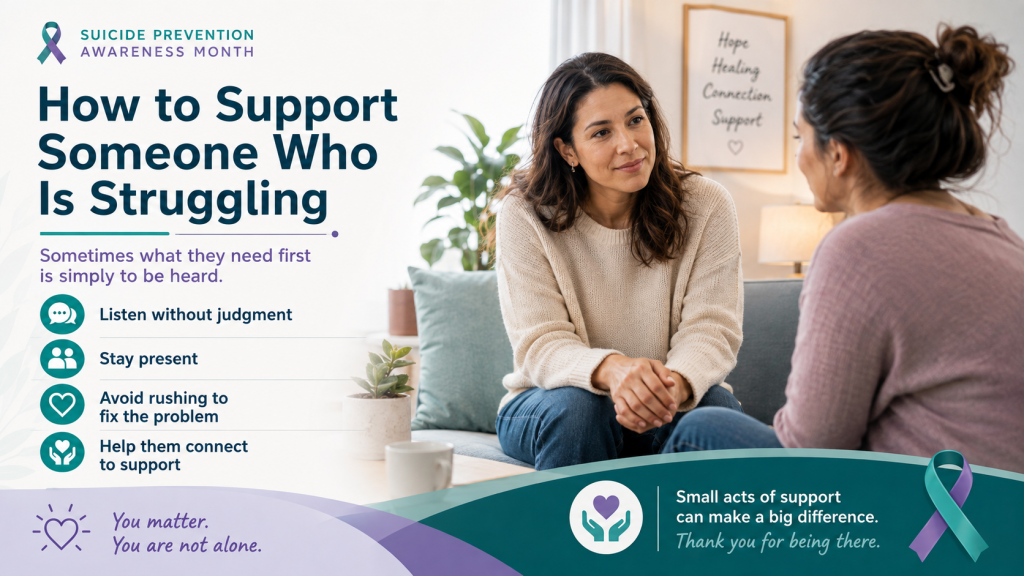
Sometimes what they need first is simply to be heard.
Give the person your full attention. Listen without minimizing what they’re feeling or immediately comparing their situation to someone else’s.
Avoid responses such as, “You have so much to be grateful for,” or “Other people have it worse.”
Instead, acknowledge that they are hurting.
Stay present. Ask what they need. Encourage them to connect with a mental health professional, physician, Employee Assistance Program, crisis counselor or another trusted source of support.
If someone tells you they intend to end their life, do not leave them alone and do not promise to keep it secret. Seek immediate help.
And don’t underestimate the importance of following up later.
A text message, phone call or simple question such as “How are you doing today?” can remind someone that they haven’t been forgotten.
Connection Matters
Human beings need connection.
Feeling supported by family, friends, coworkers and community can help protect emotional well-being. The CDC identifies social connectedness as an important protective factor and encourages communities to create opportunities that reduce isolation and strengthen relationships.
That doesn’t always require a formal program.
Invite someone to lunch.
Call the friend you haven’t heard from lately.
Check on a coworker who’s been unusually quiet.
Invite a neighbor for a walk.
Include someone who seems to be on the outside of a group.
Small moments of genuine human connection can matter more than we realize.
Support Mental Health at Work
Because adults spend so much of their lives working, the workplace can play an important role in supporting mental health.
Work-related stress can affect an employee’s well-being both on and off the job, and managers and supervisors can help create healthier environments by addressing unnecessary workplace stress and making support easier to access.
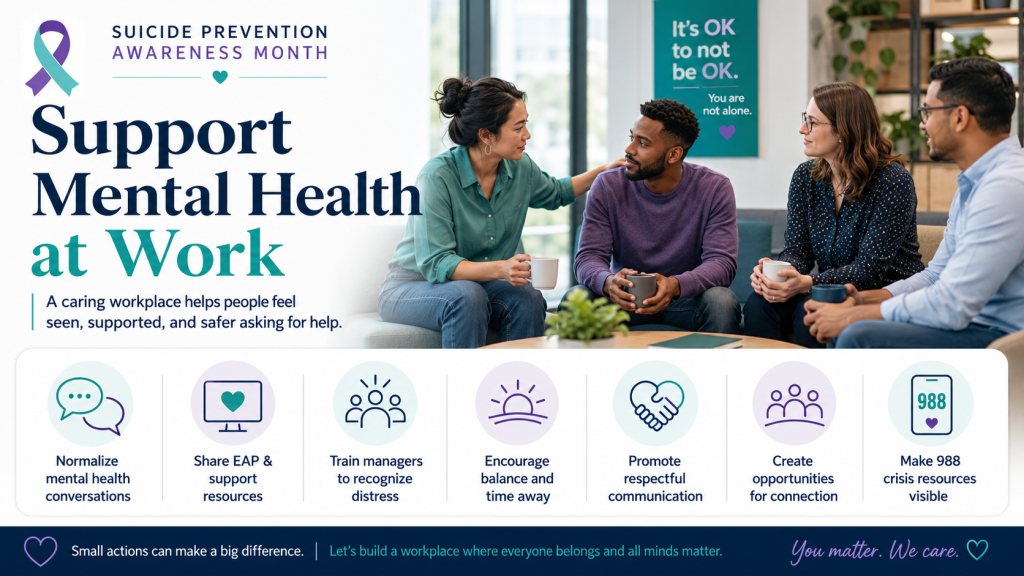
Employers can help by:
Normalizing conversations about mental health
Making Employee Assistance Program and behavioral health resources easy to find
Training managers to recognize signs of distress
Encouraging reasonable workloads and time away from work
Promoting respectful communication
Creating opportunities for connection
Reminding employees that asking for help is a sign of self-awareness, not weakness
Making crisis resources such as 988 visible and accessible
Federal workplace suicide-prevention guidance also emphasizes creating cultures that support employee well-being, help-seeking and connectedness.
A caring workplace cannot solve every problem an employee may be facing, but it can create an environment where people feel safer speaking up before they reach a crisis point.
Take Care of Your Own Mental Health
Suicide prevention also includes caring for our own emotional well-being.
Mental health deserves the same attention we give physical health.
Pay attention when stress begins to feel overwhelming. Give yourself permission to rest. Stay connected with people you trust. Move your body regularly. Spend time outdoors. Maintain healthy sleep habits when possible and recognize when you’re carrying more than you can manage alone.
And seek help early.
You do not have to wait until life becomes unbearable before talking with a counselor, therapist, doctor or someone you trust.
Sometimes asking for help is one of the strongest decisions a person can make.
You Don’t Have to Have All the Answers
One of the biggest misconceptions about suicide prevention is that you must know exactly what to say.
You don’t.
You don’t have to be a therapist.
You don’t have to solve someone’s problems.
You don’t have to give brilliant advice.
You can listen.
You can care.
You can ask.
You can stay.
And you can help connect someone with people who are trained to provide additional support.
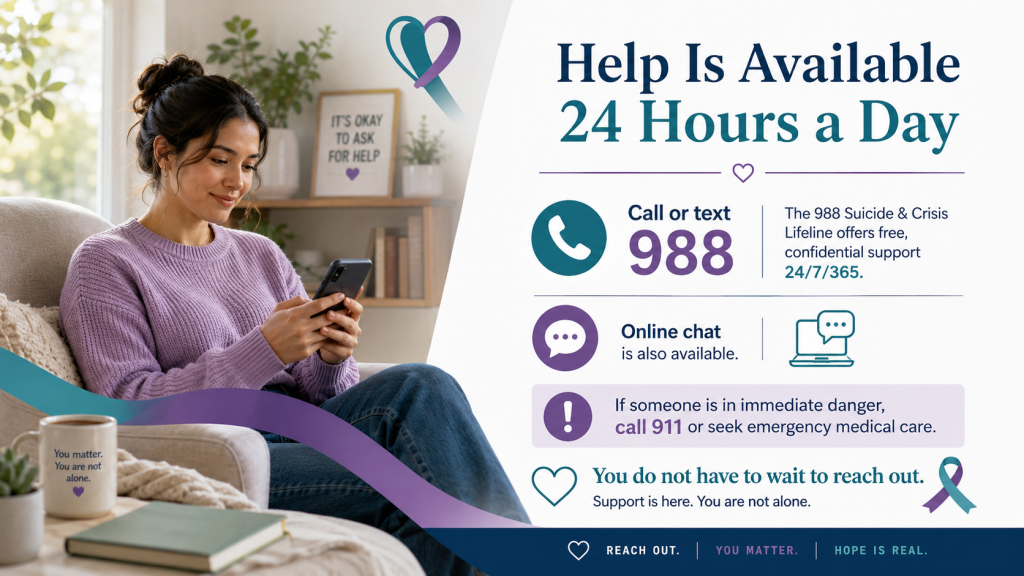
Help Is Available 24 Hours a Day
If you or someone you know is experiencing emotional distress, a mental health crisis or thoughts of suicide, the 988 Suicide & Crisis Lifeline is available throughout the United States.
Call or text 988.
The Lifeline provides free, confidential support 24 hours a day, 7 days a week, 365 days a year. People can also connect with a crisis counselor through online chat.
If someone is in an immediate life-threatening situation, call 911 or seek emergency medical care.
You do not have to wait until you’re certain something is a crisis to reach out.
Hope Starts With Connection
Suicide Prevention Awareness Month reminds us that conversations about mental health should not be limited to September.
People need connection all year long.
Notice the people around you.
Check in when something doesn’t seem right.
Listen without judgment.
Share resources.
Follow up.
And remember that sometimes one compassionate conversation can be the beginning of someone finding the help they need.
Connect. Support. Give hope.
Because everyone deserves to know that their life matters—and that they don’t have to face their hardest moments alone.
Every September, National Preparedness Month reminds us that emergencies can happen at any time—and being prepared can make a tremendous difference when they do.
Hurricanes, severe storms, floods, wildfires, power outages, extreme heat, winter weather and other emergencies can disrupt our homes, workplaces and communities with little warning. Preparation doesn’t mean expecting the worst. It means taking practical steps now so you know what to do if something unexpected happens.
The good news is that emergency preparedness doesn’t have to be complicated. A few simple actions can help protect you, your family, your coworkers and even your pets when you need it most.
Start With an Emergency Plan
One of the most important steps you can take is creating a plan before an emergency occurs.
Talk with everyone in your household about what you would do in different situations. Consider questions such as:
How will we contact each other if cell service is disrupted?
Where will we meet if we cannot return home?
What evacuation routes should we use?
Who will pick up children or assist older family members?
What will we do with our pets?
Does anyone in the household have medications, medical equipment, mobility needs or other special considerations?
Choose an emergency contact outside your immediate area as well. During a widespread emergency, it may sometimes be easier to reach someone outside the affected community.
Most importantly, make sure everyone knows the plan.
Build an Emergency Supply Kit
An emergency supply kit can help you remain safe and comfortable if you lose electricity, have to evacuate or are unable to reach stores and other services.
Consider keeping supplies such as:
Water
Nonperishable food
Flashlights
Extra batteries
Battery-powered or hand-crank radio
First-aid supplies
Necessary medications
Cell phone chargers and portable power banks
Personal hygiene supplies
Copies of important documents
Cash
Pet food and pet supplies
Blankets and weather-appropriate clothing
Your emergency kit should reflect the needs of the people in your household. Families with infants, older adults, individuals with disabilities, medical conditions or pets may need additional supplies.
Don’t build the kit and forget about it. Check it periodically and replace expired food, medications, batteries and other supplies.
Know the Risks Where You Live
Preparedness looks different depending on where you live and work.
Coastal communities may need to prepare for hurricanes and storm surge, while other areas may experience tornadoes, wildfires, earthquakes, floods, winter storms or extreme temperatures.
Learn which emergencies are most likely in your area and understand the recommended response for each one.
For example, the safest response during a tornado is very different from the safest response during a wildfire evacuation.
Knowing what to do before an emergency can save valuable time when every minute matters.
Stay Informed
Reliable information is critical during an emergency.
Make sure you have more than one way to receive warnings and updates. Consider local emergency notification systems, weather alerts and official government or emergency-management resources.
A battery-powered or hand-crank radio can also provide important information when electricity, internet service or cellular networks are unavailable.
And remember: during an emergency, information shared through social media may not always be accurate. Whenever possible, verify instructions through trusted local authorities and emergency-management sources.
Don’t Forget Preparedness at Work
Most adults spend a significant part of their day at work, making workplace preparedness just as important as preparing at home.
Employees should know:
Where emergency exits are located
Where to gather after an evacuation
How emergency notifications are communicated
Where first-aid kits and automated external defibrillators (AEDs) are located
Who to contact during an emergency
Procedures for severe weather, fires and other workplace emergencies
Employers can use National Preparedness Month as an opportunity to review emergency procedures, update contact information, conduct drills and encourage employees to create emergency plans for their own families.
Prepare for Medical Needs
If you or someone you care for relies on prescription medications, medical devices or specialized healthcare, include those needs in your emergency planning.
Keep an updated list of medications, dosages, physicians, allergies and important medical information where it can be accessed quickly.
If medical equipment requires electricity, develop a backup plan in case of an extended power outage.
Individuals who require additional assistance during an evacuation should also identify family members, friends, neighbors or community resources who may be able to help.
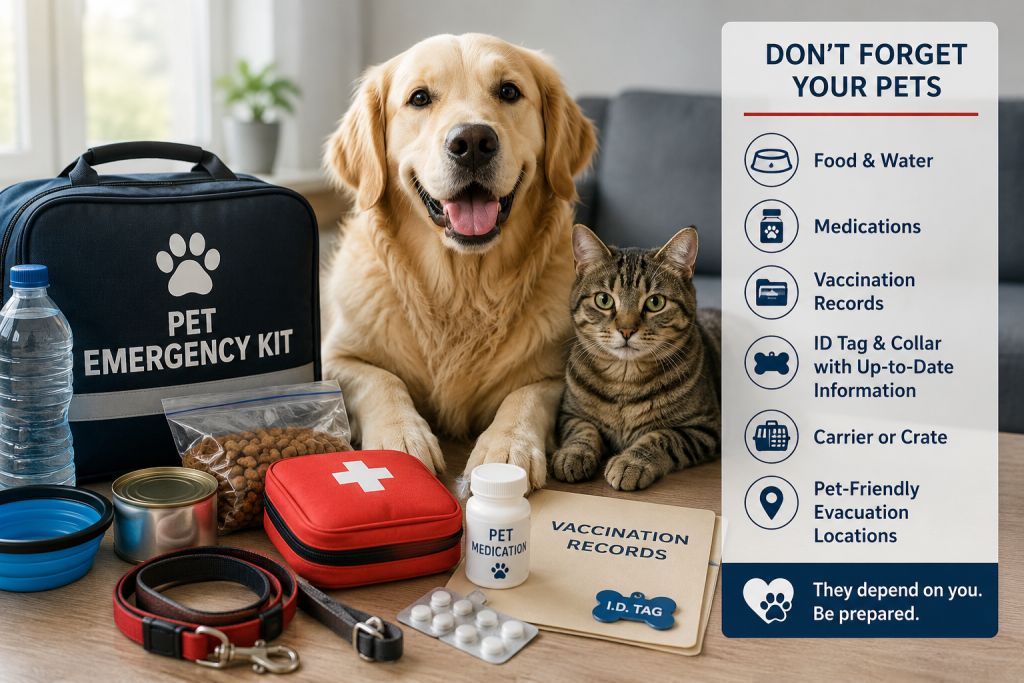
Include Your Pets
Pets are part of the family, and they need an emergency plan too.
Keep pet food, water, medications, vaccination records, identification, carriers, leashes and other essential supplies with your emergency materials.
It’s also helpful to identify pet-friendly evacuation locations or accommodations ahead of time. During an emergency is not the ideal time to start searching for somewhere that will accept your animal.
Get to Know Your Neighbors
Prepared communities are stronger communities.
Think about people nearby who may need extra assistance, including older adults, individuals living alone or people with disabilities.
Something as simple as exchanging contact information with a neighbor can make a significant difference during an emergency.
Community preparedness isn’t only about receiving help. It’s also about knowing how you may be able to help someone else.
Small Steps Today Can Make a Big Difference Tomorrow
You don’t have to prepare for every possible emergency in one day.
Start with one thing.
Create a family communication plan. Buy a flashlight. Store some extra water. Make copies of important documents. Sign up for emergency alerts. Add a few supplies to your emergency kit each week.
Then keep building from there.
National Preparedness Month is a reminder that preparedness starts before the emergency—not after it.
Taking a little time today to make a plan, build a kit and understand the risks around you can give you greater confidence when the unexpected happens.
Your Preparedness Challenge
Before the end of National Preparedness Month, complete these four steps:
1. Make a plan. Know how you and your family will communicate, evacuate and reconnect.
2. Build a kit. Gather the supplies you may need during the first days of an emergency.
3. Stay informed. Know how you will receive reliable emergency alerts and instructions.
4. Help your community prepare. Check on neighbors, share preparedness information and encourage the people around you to make their own plans.
Being prepared isn’t about being afraid of what might happen.
July is recognized as UV Safety Month, making it an important time to raise awareness about the risks of ultraviolet radiation and the simple steps everyone can take to protect themselves.
Whether you are spending the day at the beach, working outdoors, attending a summer event, or simply running errands, ultraviolet rays can affect your skin and eyes. UV protection is not just for sunny summer days—it should be part of your routine throughout the year.
What Is UV Radiation?
Ultraviolet radiation is an invisible form of energy produced by the sun. It also comes from artificial sources such as tanning beds and sunlamps.
There are two primary types of UV rays that reach the earth:
UVA rays penetrate deeply into the skin and contribute to premature aging, wrinkles, and long-term skin damage.
UVB rays are a major cause of sunburn and play an important role in the development of skin cancer.
Too much UV exposure can damage skin cells, increase the risk of skin cancer, cause premature skin aging, and contribute to serious eye conditions.
Everyone Needs Sun Protection
People sometimes assume that only those with fair skin need to worry about UV exposure. However, people of every skin tone can experience sun damage and develop skin cancer.
Although some individuals may burn more easily than others, everyone benefits from taking precautions. Children are especially vulnerable because repeated UV exposure and sunburns early in life may contribute to future skin damage.
Simple Ways to Protect Yourself
You do not have to avoid outdoor activities to practice UV safety. A combination of protective measures can significantly reduce your exposure.
Use the Right Sunscreen
Choose a broad-spectrum, water-resistant sunscreen with an SPF of 30 or higher. Broad-spectrum sunscreen helps protect against both UVA and UVB rays.
Apply sunscreen generously to all exposed skin, including commonly missed areas such as:
Ears
Neck
Tops of the feet
Hands
Hairline
Lips
Apply sunscreen before going outdoors and reapply it approximately every two hours. Reapply sooner after swimming, sweating, or towel drying.
Remember that sunscreen should be used along with other protective measures rather than as your only form of protection.
Wear Protective Clothing
Clothing creates a physical barrier between your skin and the sun. When possible, wear lightweight, tightly woven shirts and pants that cover exposed skin.
Sun-protective clothing may also include a UPF rating, which measures how effectively the fabric blocks UV radiation.
Choose the Right Hat
Wear a wide-brimmed hat that shades your face, ears, neck, and scalp. Baseball caps provide some protection but often leave the ears and back of the neck exposed.
Protect Your Eyes
UV rays can also damage your eyes and the sensitive skin surrounding them.
Choose sunglasses labeled as providing 99% to 100% UVA and UVB protection or UV400 protection. Wraparound sunglasses may offer additional coverage by helping block rays from the sides.
Children should wear properly fitted UV-protective sunglasses as well.
Seek Shade
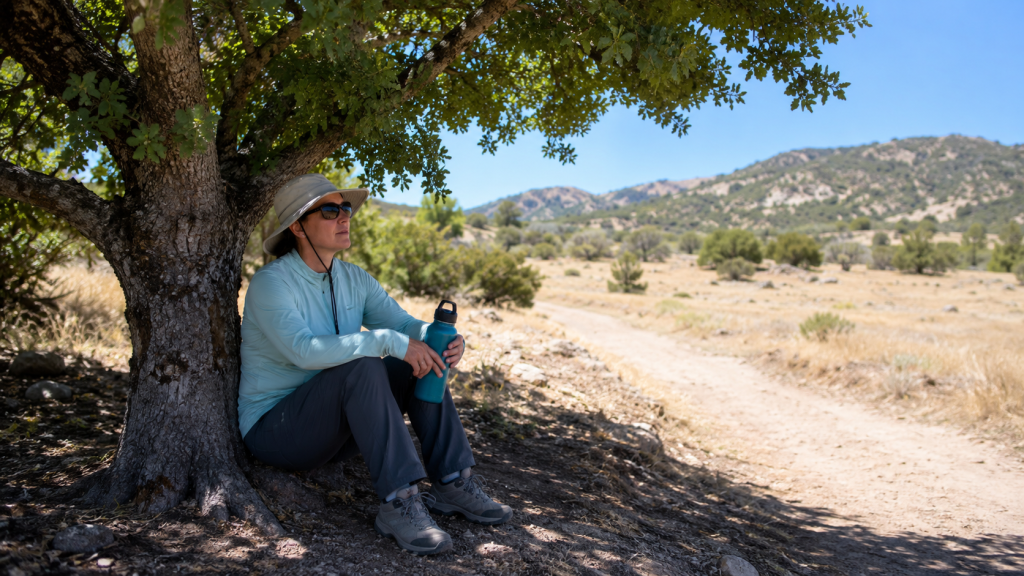
Shade can help reduce direct UV exposure, particularly during the middle of the day. Trees, umbrellas, covered patios, and canopies can all provide protection.
UV rays are often strongest between approximately 10 a.m. and 4 p.m. When possible, schedule extended outdoor activities earlier in the morning or later in the afternoon.
Keep in mind that UV rays can reflect off water, sand, pavement, and snow, so protection may still be necessary while sitting in the shade.
Check the UV Index
The UV Index forecasts the expected strength of ultraviolet radiation in your area. The scale typically ranges from 1 to 11 or higher—the higher the number, the greater the potential for skin and eye damage.
Check the daily UV Index through a trusted weather website or application before planning outdoor activities.
Do Not Rely on Cloud Cover
Cloudy or cool weather does not eliminate UV exposure. UV rays can still reach your skin when the sky is overcast, and sun damage can occur even when the temperature feels comfortable.
Daily protection is important during every season, including fall and winter.
Avoid Indoor Tanning
Tanning beds and sunlamps expose the skin to artificial UV radiation. A tan is not a sign of healthy skin—it is evidence that the skin has been injured.
Avoiding indoor tanning is an important part of reducing your UV exposure and skin cancer risk.
Know Your Skin
UV Safety Month is also a good reminder to become familiar with your skin.
Check your skin regularly for:
New or unusual growths
Sores that do not heal
Spots that change in size, color, shape, or texture
Moles with irregular borders
Areas that itch, bleed, crust, or become painful
Contact a qualified healthcare professional or dermatologist if you notice a new or changing spot or have concerns about your skin.
Make UV Safety a Daily Habit
Sun protection does not need to be complicated. Keep sunscreen near your keys, in your purse, or with your outdoor supplies. Place sunglasses and hats where they are easy to grab, and encourage children and family members to follow the same routine.
During UV Safety Month, take a few moments to evaluate your current sun-protection habits. A little preparation can help protect your skin and eyes while allowing you to safely enjoy the outdoors.
Protect your skin. Protect your eyes. Practice UV safety every day.
Every June, Migraine Awareness Month shines a much-needed spotlight on one of the most common, disabling, and misunderstood neurological diseases in the world. For too long, migraine has been dismissed as “just a headache,” minimized as a minor inconvenience, or misunderstood as something a person can simply push through. The truth is far more serious.
Migraine is a complex neurological condition that can affect the brain, body, emotions, senses, work life, family life, and overall quality of life. It can cause severe head pain, nausea, vomiting, dizziness, fatigue, sensitivity to light, sound, smell, and movement, vision changes, brain fog, numbness, speech difficulty, and lingering exhaustion long after the worst pain has passed. For many people, migraine is not an occasional headache. It is a chronic, disruptive condition that can impact relationships, careers, caregiving responsibilities, mental health, and daily independence.
Migraine Awareness Month is about more than wearing a ribbon or sharing a social media post. It is about education, compassion, advocacy, and action. It is a time to recognize the millions of people who live with migraine, validate their experience, reduce stigma, and encourage better access to diagnosis, treatment, workplace support, and community understanding.
Migraine Is Not “Just a Headache”
One of the greatest barriers people with migraines face is misunderstanding. Because migraine symptoms are often invisible, many people assume the person “looks fine” and therefore must be fine. But migraine is a neurological disease, not a simple headache.
A migraine attack can involve multiple phases. Some people experience warning signs hours or even days before the head pain begins. This early stage, called the prodrome phase, may include yawning, mood changes, food cravings, neck stiffness, fatigue, trouble concentrating, frequent urination, or sensitivity to light and sound.
Some people also experience aura. Aura can include visual changes such as flashing lights, zigzag lines, blind spots, or blurred vision. It may also involve tingling, numbness, dizziness, or difficulty speaking. Aura symptoms can be frightening, especially when they happen for the first time, and should always be discussed with a healthcare professional.
The headache phase of migraine may bring throbbing or pulsing pain, often on one side of the head, but migraine can also affect both sides or shift locations. Pain may worsen with movement. Many people also experience nausea, vomiting, sensitivity to light, sensitivity to sound, sensitivity to smells, dizziness, and extreme fatigue.
After the pain improves, the attack may still not be over. The postdrome phase, often called a “migraine hangover,” can leave a person feeling drained, foggy, weak, emotional, sore, or unable to return fully to normal activities for hours or even days.
Understanding these phases helps explain why migraine can be so disruptive. It is not only the hours of pain that matter. It is the entire cycle before, during, and after the attack.
Who Is Affected by Migraine?
Migraine can affect children, teenagers, adults, and older adults. It can affect people of every background, race, income level, and profession. However, migraine is especially common in women, often influenced by hormonal changes related to menstruation, pregnancy, postpartum changes, perimenopause, or menopause.
Migraine can also run in families. If a parent or close family member lives with migraine, others in the family may be more likely to experience it as well. But even without a family history, migraine can still occur.
For some people, attacks happen occasionally. For others, migraine becomes frequent or chronic. Chronic migraine is often defined as having headaches on 15 or more days per month, with migraine features on at least 8 of those days, for more than three months. Chronic migraine can be especially disabling and often requires a more comprehensive treatment plan.
Common Migraine Triggers
Migraine triggers are not the same for everyone. A trigger does not “cause” migraine by itself, but it may help set off an attack in someone whose brain is already vulnerable to migraine.
Common triggers may include:
Stress or the letdown after stress Sleep changes or poor sleep Skipped meals or dehydration Hormonal changes Bright lights or fluorescent lighting Strong smells Weather or barometric pressure changes Alcohol, especially red wine Certain foods or food additives Too much caffeine or caffeine withdrawal Screen glare Loud noise Overexertion Neck tension Changes in routine
It is important to remember that triggers can be complicated. Sometimes what appears to be a trigger may actually be an early symptom of the migraine itself. For example, a person may crave chocolate during the prodrome phase and later believe chocolate caused the attack, when the craving may have been part of the attack beginning.
Keeping a migraine diary can help identify patterns. Tracking sleep, meals, hydration, stress, weather changes, menstrual cycles, symptoms, medications, and attack timing can provide valuable information for both the patient and healthcare provider.
Treatment: There Is Hope
Migraine treatment has improved significantly. While there is no universal cure, many people can reduce the frequency, severity, and disruption of migraine attacks with the right plan.
Migraine care often includes three major categories: acute treatment, preventive treatment, and lifestyle or behavioral strategies.
Acute treatments are used when an attack begins. These may include over-the-counter pain relievers, prescription migraine-specific medications such as triptans, anti-nausea medications, gepants, ditans, or other medications recommended by a healthcare provider. The goal is to treat the attack early and effectively before symptoms become more severe.
Preventive treatments are used to reduce how often attacks happen or how severe they become. Preventive options may include daily oral medications, monthly injections, quarterly infusions, Botox for chronic migraine, CGRP-targeting therapies, gepants used preventively, neuromodulation devices, and other medical approaches based on a person’s symptoms, health history, and migraine frequency.
Lifestyle and behavioral strategies may also play an important role. Regular sleep, consistent meals, hydration, stress management, exercise as tolerated, relaxation techniques, cognitive behavioral therapy, biofeedback, and avoiding known triggers can help some people manage migraine more effectively. These strategies are not a replacement for medical care, but they can be a powerful part of a complete plan.
The most important message is this: people living with migraine deserve proper diagnosis and treatment. They should not be told to simply “deal with it,” “drink more water,” or “stop stressing.” Migraine is real, and help is available.
Migraine in the Workplace
Migraine can have a major impact at work. Bright lights, computer screens, noise, strong odors, long hours, skipped meals, and high stress can all make symptoms worse. Because migraine is often invisible, employees may feel embarrassed or afraid to ask for support.
Workplace accommodations can make a meaningful difference. Helpful changes may include reducing harsh lighting, allowing screen filters or anti-glare monitors, offering flexible scheduling, allowing remote work when possible, providing access to a quiet dark space during an attack, reducing exposure to strong smells, allowing breaks for food and hydration, and supporting employees who need medical appointments.
Employers benefit when they take migraine seriously. Supportive workplaces can reduce presenteeism, absenteeism, stigma, and unnecessary suffering. A compassionate workplace culture allows employees to seek care, manage symptoms, and remain productive without feeling judged.
The Emotional Impact of Migraine
Migraine does not only affect the body. It can affect a person’s emotional well-being. People with frequent migraine may worry about when the next attack will happen. They may cancel plans, miss family events, fall behind at work, or feel guilty for needing rest. Over time, this can lead to isolation, frustration, anxiety, or depression.
The emotional burden is often made worse when others dismiss the condition. Statements like “Everyone gets headaches,” “You looked fine yesterday,” or “You just need to toughen up” can be deeply harmful. Migraine Awareness Month reminds us that compassion matters. Listening matters. Believing people matters.
Support from family, friends, coworkers, employers, and healthcare providers can make a real difference. Sometimes the most powerful thing you can say is, “I believe you. How can I help?”
When to Seek Medical Care
Anyone who experiences recurring headaches or migraine-like symptoms should talk with a healthcare professional. A proper diagnosis can help rule out other conditions and open the door to better treatment.
Emergency care is needed for a sudden, severe headache that feels like the worst headache of your life, a headache after a head injury, headache with fever or stiff neck, confusion, seizure, fainting, double vision, weakness, numbness, trouble speaking, or symptoms that feel very different from your usual migraine pattern. New aura-like symptoms should also be evaluated, especially if they have never been diagnosed before.
People should also seek medical advice if headaches are becoming more frequent, more severe, harder to treat, interfering with work or daily activities, or requiring frequent medication. Overuse of pain medication can sometimes make headaches worse over time, so a healthcare provider can help create a safer and more effective treatment plan.
How to Support Migraine Awareness Month
Migraine Awareness Month is an opportunity for everyone to help create change. You do not have to be a medical expert to make a difference.
You can learn the signs and symptoms of migraine. You can stop calling migraine “just a headache.” You can share accurate information. You can encourage someone to seek care. You can support migraine-friendly workplace policies. You can listen without judgment. You can advocate for better access to treatment. You can participate in awareness events. You can wear purple, the color commonly associated with migraine awareness. You can share your story or amplify the stories of others.
Awareness leads to understanding. Understanding leads to compassion. Compassion leads to better care, better support, and better outcomes.
A Final Message for Migraine Awareness Month
Migraine is real. Migraine is disabling. Migraine is neurological. Migraine is often invisible, but the people living with it should never feel invisible.
This Migraine Awareness Month, let us move beyond outdated myths and make room for truth. Let us recognize the strength of those who live with migraine, the families who support them, the employers who accommodate them, and the healthcare professionals who help them find relief.
No one should have to suffer in silence. No one should have to prove their pain. No one should be dismissed because their disease cannot always be seen.
Migraine Awareness Month is a call to listen, learn, support, and advocate. Together, we can help build a world where migraine is understood, treatment is accessible, workplaces are compassionate, and every person living with migraine feels seen, heard, and supported.
Raising Mental Health Awareness: Breaking Stigma, Building Support
Mental health awareness is more than a conversation—it’s a movement toward understanding, compassion, and action. Each May, communities across the country recognize Mental Health Awareness Month, highlighting the importance of emotional well-being and access to care. From local wellness fairs to national campaigns, the goal is simple: normalize seeking help and remind people they are not alone.
Consider the story of Jordan, a working parent who quietly struggled with anxiety for years. Balancing career pressures and family responsibilities became overwhelming, but fear of judgment kept her from reaching out. After attending a community health event, she connected with a counselor and began small, manageable steps toward healing—therapy, mindfulness, and support groups. Today, Jordan not only manages her mental health but also advocates for open conversations in the workplace.
Stories like this are common. Conditions such as Anxiety Disorder and Depression affect millions of people each year, yet stigma and lack of access still prevent many from getting the help they need. Encouragingly, awareness campaigns and workplace initiatives are expanding resources—from telehealth therapy to mental wellness programs—making care more accessible than ever.
By fostering understanding, promoting early intervention, and supporting one another, we can build a culture where mental health is treated with the same importance as physical health. Awareness is the first step—but compassion and action are what truly make a difference.
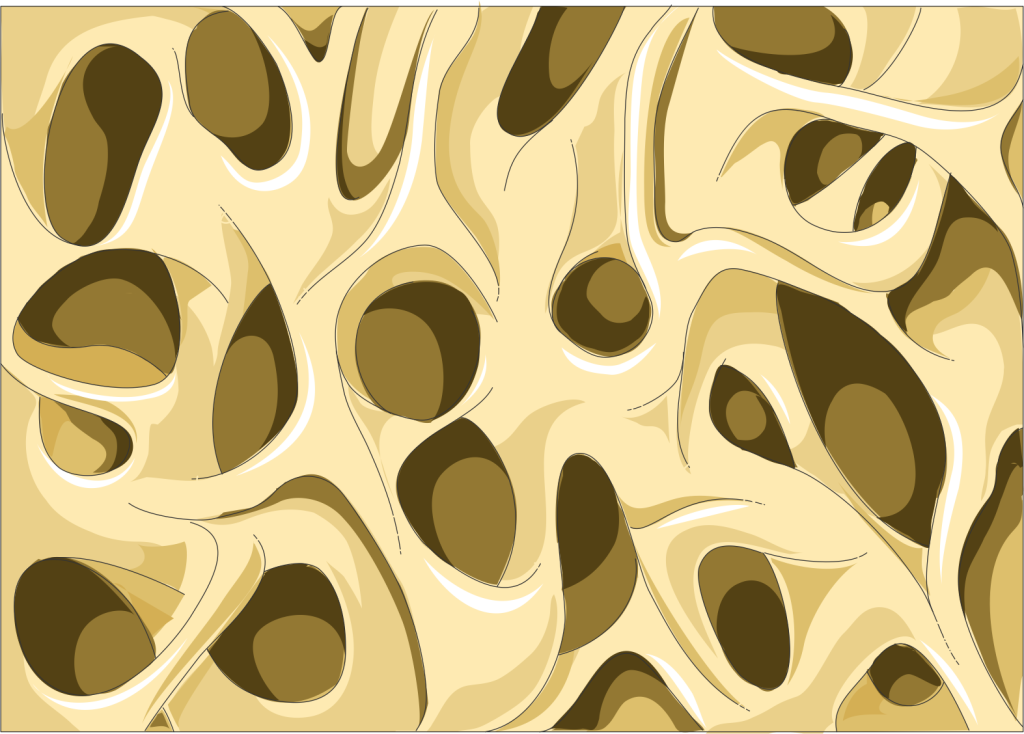
Osteoporosis is often called a “silent disease,” yet its impact is anything but quiet. Each year, millions suffer fractures—hip, spine, wrist—caused by weakened bones. While anyone can be affected, women post-menopause and older adults are especially at risk.
Take the story of Maria, a retired teacher who, after a surprise fracture, transformed her routine. She embraced weight-bearing exercise, added calcium-rich foods, and joined a bone health support group. Her bone density stabilized, and she’s now an advocate for early screening.
Early Warning Signs
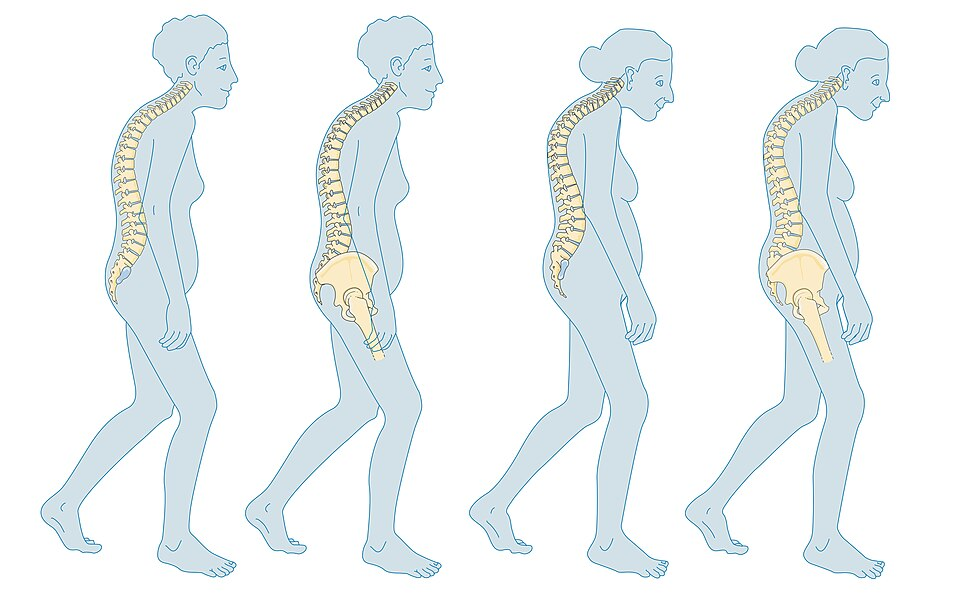
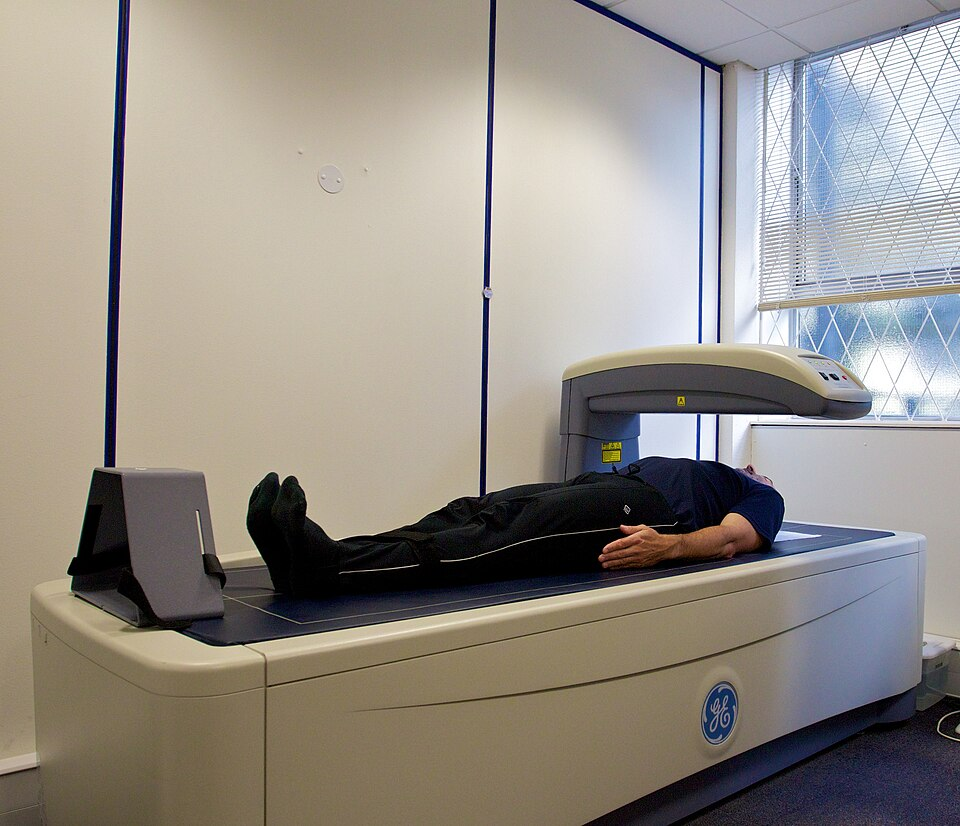
Osteoporosis is sneaky because it often doesn’t show obvious symptoms early on. But there are subtle signs to watch for. A loss of height over time can be an indicator or a stooped posture. If you have fractures from minor bumps or falls—especially in the wrist, spine, or hip—that’s a red flag. Some people feel back pain due to small fractures in the spine. If you notice any of these, it’s worth talking to a doctor early for a bone density check.
Key points for prevention:
Get enough calcium and vitamin D—diet or supplements help maintain bone strength.
Engage in weight-bearing exercises like walking, dancing, or strength training.
Avoid smoking and limit alcohol, both of which can weaken bones.
Get bone density scans, especially if you’re at higher risk, to catch early signs.
Maintain a balanced diet with fruits, vegetables, and adequate protein.
The good news? Prevention is possible. Awareness campaigns highlight the importance of nutrition—calcium, vitamin D—regular exercise, and avoiding smoking. We all have a role to play in advocating bone health—because strong bones mean a stronger future.
Greatness is often explained through genetics, work ethic, or sacrifice. That story is incomplete.
What separates the Greatest of All Time (GOAT) from the merely elite is not just physical mastery or technical skill—it is mental hygiene: the ongoing discipline of tending to one’s inner environment with the same rigor applied to physical training.
That has always been true.
What’s changed is this:
In the Age of AI, mental hygiene is no longer just for the GOATs. It is becoming essential for anyone who wants to perform well or live a fulfilled life without being quietly overtaken by speed, noise, and feedback.
No modern athlete illustrates this more clearly than Simone Biles.
Simone Biles: Redefining Greatness Through Mental Hygiene
Biles has been dubbed the GOAT in gymnastics for her consistency, longevity, and, perhaps most importantly, for her ability to push the boundaries in her sport.
Simone Biles didn’t just dominate gymnastics, she redefined the psychological contract of excellence. GOAT status achieved.
When she stepped away from competition at the Tokyo Olympics, many framed it as fragility. In reality, it was elite mental hygiene in action.
She recognized something fundamental:
The body executes what the mind permits
Precision sports punish even microscopic cognitive dissonance
Ignoring internal signals is not toughness—it is negligence
Her decision was not avoidance. It was maintenance.
Psychological safety as a prerequisite for peak performance. Genius requires vulnerability.
Differentiating identity from output. Ever feel like a human-doing and not a human being?
Treating mental clarity as non-negotiable infrastructure
That is not a weakness. That is GOAT-level systems thinking.
Mental Hygiene: The Hidden Operating System of Greatness
Mental hygiene is not “positive thinking.” It is not motivation. It is not confidence.
It is the deliberate care of the meaning-making machinery that determines:
Focus under pressure
Decision-making at speed
Recovery after failure
The ability to sustain excellence without collapse
Every GOAT eventually learns the same lesson:
You do not rise to the level of your talent. You fall to the level of your unexamined inner architecture.
Simone Biles simply learned it earlier—and publicly.
Other GOATs Who Built Mental Hygiene Regimes
Simone is not an anomaly. She is part of a quiet lineage.
Across eras and disciplines, the greatest performers didn’t just train their bodies—they trained their inner operating systems.
Michael Jordan Used visualization, emotional regulation, and ruthless narrative control. His edge was not rage—it was meaning discipline.
Serena Williams Worked extensively with sports psychologists, breathwork, and emotional self-regulation to sustain dominance across decades.
Novak Djokovic Treats meditation, breath control, dietary clarity, and cognitive reframing as performance fundamentals—not accessories.
Kobe Bryant The “Mamba Mentality” was a structured internal practice: attention control, narrative precision, and emotional hygiene under pressure.
Tom Brady Integrated mindfulness, body awareness, and identity separation to sustain elite performance into his mid-40s.
The pattern is unmistakable.
Why This Conversation Matters Now
These GOATs were performing at 100% in environments that demanded everything from them.
But here’s the shift:
You no longer need to be an elite athlete to experience elite-level cognitive pressure.
We are now living in a world where:
Information never stops
Comparison is algorithmic
Feedback is instant
Identity is continuously mirrored back to us
Attention is fragmented by design
Some people reading this want to perform at the highest level of their field. Others simply want to live a grounded, fulfilled life without feeling mentally hijacked.
In both cases, the challenge and opportunity is the same:
The modern mind is no longer stressed by effort alone — it is stressed by the velocity of change.
The speed at which meaning, judgment, and possibility arrive now exceeds the nervous system’s natural capacity to integrate them without intentional hygiene.
It took roughly 10,000 years to go from writing to the printing press, but only 500 more to get to email. The number of happenings in our time compared to those of our ancestors is unprecedented. What used to take 10,000 years, now takes 1,000. Novelty that used to manifest inside 100 years now appears in 10.
Futurists and technologists have used metaphors and heuristic models, like Buckminster Fuller’s ‘knowledge doubling curve’, to describe how human knowledge and digital information are accelerating at unprecedented rates. The Age of AI changes the very way these models measure our experience.
This is why mental hygiene is no longer optional. It is becoming infrastructure.
Mental Hygiene in the Age of AI
Artificial intelligence is not just changing how we work. It is changing how meaning forms. We are living in a society that programs us through 90-second AI-augmented video clips. A world where we need a natural discernment in everything we see. Our cognitive load is shifting. We have to learn now to orient and navigate in a busy, noisy world.
The illiteracy of our age isn’t about being able to read or write. It’s about whether we can begin to orient in a world our old programming wasn’t designed to operate from. Can we learn, unlearn, and then relearn again?
When:
Narratives update instantly. The Velocity of change is passing a tipping point.
Feedback loops never close. News is global and 24/7, all focused on suffering. Suffering sells
Identity becomes data-reflected
Thought accelerates without pause
Unexamined inner patterns don’t disappear. They accelerate.
Old assumptions become faster loops. Unresolved meaning gets louder. Automatic reactions begin to feel like “who we are.”
People don’t burn out because they’re weak.
They burn out because they are running outdated inner software at modern speeds.
The GOATs sensed this intuitively. Most people are only now beginning to feel it.
From Performance Hygiene to Personal Hygiene
Elite performers treat mental hygiene the way pilots treat instruments:
Not as inspiration
Not as self-help
But as navigation
For some, this is about winning medals.
For others, it’s about:
Not losing themselves
Not living in chronic reactivity
Not confusing pressure with purpose
Reclaiming agency and purpose to the “I am”.
The principle is universal:
If you don’t tend the inner environment, the environment will tend you.
Introducing Turning Within
This is where Turning Within fits—not as a philosophy, but as practice. (Learn More Here)
Turning Within is a personal mental hygiene discipline designed to help practitioners:
Recalibrate their inner orientation
Examine and update deep conscious patterns
Interrupt and recalibrate automatic feedback loops in a high-speed world
Integrate a deeper, more conscious, purposeful version of self in all facets of life.
In a modern mind moving at light speed, meaning doesn’t just form—it feeds back on itself:
Meaning drives narrative.
Narrative flows in story form.
Story forms and is informed by belief.
Perception reinforces the original thought.
Turning Within gives people a way to:
Slow that loop down
See it clearly
Change it deliberately
Not to escape reality. But to engage it with agency.
Just as physical hygiene prevents illness, mental hygiene prevents distortion.
And distortion scales fast now.
The Pattern Is the Point
Across disciplines, eras, and personalities, the pattern is consistent:
Physical training builds capacity
Technical training builds execution
Mental hygiene sustains and creates conscious coherence
GOATs don’t just train harder. They maintain their inner environment so pressure doesn’t distort perception, identity, or choice.
Simone Biles didn’t step back from greatness. She demonstrated it.
The Real Question
The real question is no longer:
“Do you have what it takes to be the GOAT?”
It is:
“Are you willing to maintain your mind with the same seriousness you maintain your life?”
Because talent without mental hygiene doesn’t fail loudly. It fails slowly—through burnout, distortion, and loss of agency.
In the Age of AI, that slow failure happens faster. Equally, what used to be available for the few is now the experience of many. Greatness, real greatness… and a fulfilled life now share the same requirement:
Every February, American Heart Month shines a spotlight on heart health and the steps we can all take to reduce the risk of heart disease—the leading cause of death in the United States for both men and women.
While heart disease is common, it is also largely preventable. American Heart Month reminds us that small, consistent lifestyle choices can make a powerful difference in protecting our hearts and improving overall quality of life.
Why Heart Health Matters
The heart works nonstop, pumping blood, oxygen, and nutrients throughout the body. When the heart or blood vessels are compromised, it can lead to serious conditions such as heart attacks, strokes, high blood pressure, and heart failure.
Risk factors like poor diet, physical inactivity, smoking, stress, and unmanaged health conditions can strain the heart over time. The good news is that many of these risks can be reduced with informed, proactive care.
Everyday Habits That Support a Healthy Heart
Heart health doesn’t require perfection—just progress. Building heart-smart habits can start today:
Eat a heart-healthy diet. Focus on fruits, vegetables, whole grains, lean proteins, and healthy fats while limiting excess sodium, added sugars, and processed foods.
Stay physically active. Aim for regular movement such as walking, cycling, swimming, or strength training. Even short bursts of activity add up.
Know your numbers. Monitoring blood pressure, cholesterol, and blood sugar levels helps catch potential issues early.
Manage stress. Chronic stress can raise blood pressure and strain the heart. Mindfulness, deep breathing, adequate sleep, and relaxation are essential forms of self-care.
Avoid tobacco and limit alcohol. These choices significantly impact heart and vascular health.
Heart Health Is for Everyone
Heart disease doesn’t discriminate by age or gender. While risk increases with age, younger adults benefit greatly from establishing healthy habits early. American Heart Month encourages families, workplaces, and communities to create environments that support heart-healthy choices for everyone.
Women, in particular, are encouraged to recognize heart disease symptoms, which can sometimes differ from those experienced by men. Awareness and timely care save lives.
Making Heart Health a Priority All Year Long
American Heart Month is more than a reminder—it’s a call to action. By choosing nutritious foods, staying active, managing stress, and partnering with healthcare providers, we can strengthen our hearts and protect our futures.
This month and beyond, take time to care for your heart—it’s the engine that keeps life moving.
I would like to begin this article with a personal story that explains why aromatherapy has become an integral part of my life and professional practice. As a registered nurse, I have witnessed firsthand the physical and emotional demands people carry, often quietly. My experiences at the bedside shaped my understanding of care beyond clinical treatment and led me to embrace aromatherapy as a supportive, human-centered approach to well-being—one I now hope you will feel encouraged to explore for yourself.
Sheila Tucker
A few days ago, I underwent a medical procedure that was fairly terrifying and involved multiple injections. As I waited for the procedure to begin, I felt my body begin to shift. My heart rate quickened. Heat rose into my face and neck. My jaw tightened, my shoulders stiffened, and my breathing became shallow and guarded.
These sensations were familiar. I recognized them immediately from when working with patients. They are not responses paired with weakness or anxiety, but with the nervous system moving into a fear response.
I wondered whether I could gently shift my internal state — not by forcing calm, but by offering my body a different sensory input. I immediately knew what to do. I reached in my purse and my hand landed on the forest bathing blend, an essential oil that I have nearby at all times.
I applied the rollerball of forest bathing blend slowly and deliberately to several points — my wrists, throat, heart space, lower back, behind my knees, and around my ankles — and then settled into slow, intentional breathing. There was a lightness in the moment, even a sense of appreciation. As the aroma began to register, another shift followed. The scent evoked something deeply familiar — that stabilizing experience of walking on a path through the forest filled with sounds and nature’s beauty, where the nervous system instinctively downshifts, and the body remembers how to settle. In that moment, I wasn’t trying to eliminate discomfort or control the outcome. I was restoring a sense of safety so my body could move through the experience with greater ease and resilience.
This is how I understand aromatherapy — not as a cure or shortcut, but as a sensory support for regulation, adaptability, and self-trust. As a registered nurse with over two decades of dedicated care, my work focuses on understanding how the nervous system responds to stress, pain, and uncertainty — and how intentional, sensory-based practices can help restore choice, presence, and regulation in the body. I approach practices like aromatherapy not as products or interventions, but as part of a broader system of support that includes breath, pacing, environment, and self-awareness.
The Modern Workplace
The hectic pace of today’s modern workplace.
Modern workplaces are increasingly shaped by prolonged stress, rapid change, and cumulative emotional strain. Employees may be managing demanding workloads while simultaneously navigating grief, health concerns, caregiving responsibilities, organizational restructuring, or ongoing uncertainty. In these conditions, the nervous system often remains in a heightened state of vigilance. Rather than returning to baseline after a stressful event, the body stays alert, guarded, and reactive.
Many workplace wellness initiatives attempt to address burnout by targeting symptoms such as fatigue, disengagement, or reduced productivity. True wellness practices take a different approach. Instead of forcing change or “fixing” the body, they focus on supporting the nervous system’s innate ability to return to safety and regulation. Within this framework, aromatherapy can serve as a supportive sensory practice when used with intention, education, and care.
Understanding the Nervous System at Work
Chronic stress keeps the body locked in survival physiology. Over time, this state affects sleep quality, digestion, immune function, emotional regulation, and cognitive clarity. In professional environments, this often shows up as difficulty concentrating, increased irritability, decision fatigue, or emotional numbing.
The nervous system is constantly scanning for cues of threat and safety. When stress becomes ongoing, the body may cycle through fight, flight, freeze, or fawn responses without adequate recovery. Gentle sensory cues — including breath, movement, sound, and scent — are among the most effective ways to signal safety and support a shift toward regulation.
Why Scent Plays a Unique Role
The olfactory system has a direct anatomical connection to the limbic brain, the area responsible for emotion, memory, and survival responses. Unlike other senses, scent bypasses cognitive filtering and reaches the brain rapidly. This is why aroma can influence mood, grounding, and perceived safety within seconds.
In workplace cultures that prioritize verbal communication and cognitive problem-solving, the role of sensory input is often overlooked. Aromatherapy does not require analysis or effort. It works through biological pathways already designed to respond to environmental cues. When used intentionally, it can complement broader wellness strategies by supporting emotional grounding and nervous system balance.
Applying “Forest-Bathing” Principles through Aromatherapy
Forest bathing (Shinrin-yoku) is not a fitness activity or a productivity technique. It is a public-health practice developed in Japan to reduce stress by immersing the nervous system in cues associated with natural, non-threatening environments – the forest. The therapeutic value lies in how the body responds to nature.
Researcher Quig Li has extensively studied and written about the effects of forest bathing (Shinrin-yoku) on health promotion and disease prevention. His study of forest bathing supports the physiological findings of Park (2010). Li (2022) found that forest bathing:
reduces blood pressure and heart rate, showing a preventative effect on hypertension,
reduces stress hormones,
stabilizes a balance within the nervous system,
improves sleep, and
reduces anxiety and fatigue and increases vigor with a preventive impact on depression.
(Li et al.) In 2009, through extensive study, it was demonstrated that inhaling compounds found in forest air and tree-derived essential oils elevated immune markers. The study’s results linked essential oil inhalation to Shinrin-Yoku outcomes. This is powerful information when considering how to manage stressful work environments in urban areas, in confined office spaces, and certainly in our hospital settings.
Because most workplaces cannot offer access to forests or extended time outdoors, the goal is not to replicate nature literally, but to introduce select sensory cues that support nervous-system regulation.
In high-demand professional settings, many well-intentioned initiatives inadvertently increase stimulation — adding tasks, expectations, or social pressure. Forest-bathing–informed practices take the opposite approach. They aim to:
Slow physiological pacing
Reduce sensory overload
Support perceived environmental safety
Invite bodily awareness without forcing emotional processing
A Trauma-Informed Perspective on Aromatherapy
My years of experience as a registered nurse in critical care and trauma-informed wellness, I well understand that aromatherapy is approached not as a trend or quick fix, but as a body-based sensory practice. Education, consent, and context are essential — particularly in professional environments where individuals may have differing sensitivities, histories, or health considerations.
Trauma-informed aromatherapy emphasizes:
Choice and autonomy
Low-dose, gentle exposure
Predictability and consistency
Respect for individual nervous-system responses
This approach aligns with modern workplace wellness principles that prioritize psychological safety, inclusion, and self-regulation rather than performance pressure.
In workplace contexts, effectiveness depends on how the blend is used — not on intensity or frequency.
Best Practices for Use
1. Individual, Not Ambient, Use
Forest-bathing aromatics should be used personally, never diffused into shared airspaces. Appropriate formats include:
Rollerball use
Diffusers placed in a quiet, reflective space
Scent cards stored in a drawer or bag
This preserves choice, respects sensitivities, and aligns with trauma-informed principles.
2. Brief, Intentional Exposure
Slow and targeted diffusion or rollerball application is sufficient. The goal is not prolonged exposure, but a clear sensory cue that signals the nervous system to slow and orient toward safety.
More scent does not increase effectiveness. Consistency matters more than strength.
3. Pair With a Regulating Action
Aromatics are most effective when paired with another regulating behavior, such as:
Slow nasal breathing (4–6 second exhale)
Gentle posture adjustment or grounding through the feet
A brief pause with eyes softly focused or closed
This pairing helps the body associate the aroma with settling rather than alertness.
Structuring a Personal Forest-Bathing Ritual at Work
A workplace-appropriate forest-bathing ritual should be:
Predictable
Time-limited (30–90 seconds)
Free of performance expectations
Example structure:
Step away from the screen or task
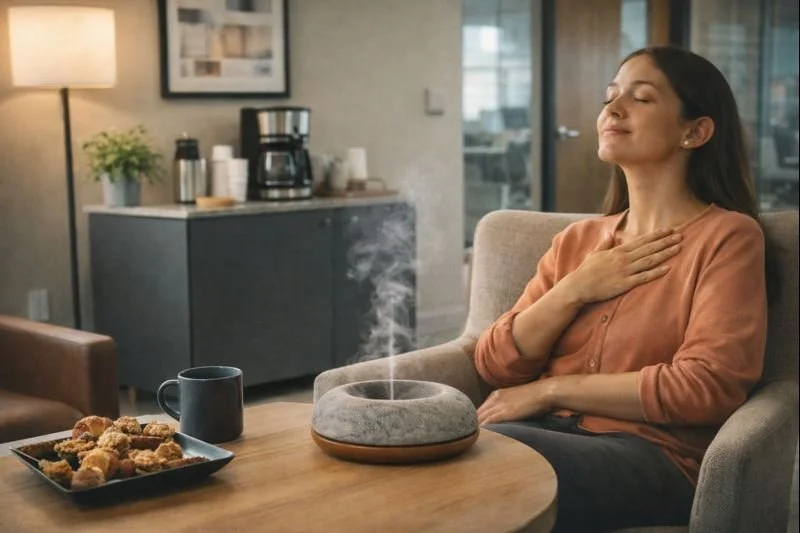
Close your eyes and focus on the aroma coming from your diffuser.
Notice physical sensations (temperature, contact with chair or floor)
Resume work intentionally
This is not meditation and does not require emotional reflection. It is a physiological reset, not a cognitive exercise.
When to Use Nature-Inspired Aromatics at Work
Forest-bathing aromatics are particularly well suited for:
Transitions between meetings
After difficult conversations
During recovery breaks
At the end of the workday to signal closure
They are not intended for use during active collaboration, meetings, or times requiring heightened alertness.
Why This Approach Works
Nature-inspired sensory cues operate through the limbic system, which governs emotion, memory, and survival responses. When the nervous system receives signals associated with non-threatening environments — such as earthy, grounded aromas — it becomes easier to shift out of chronic vigilance.
Over time, repeated low-intensity exposure paired with regulation can help:
Reduce stress reactivity
Improve emotional steadiness
Support clearer cognitive functioning
Reinforce recovery habits
This is particularly relevant in professions characterized by constant decision-making, emotional labor, or crisis exposure.
A Sensory Regulation Framework
In my work, I use a simple, trauma-informed framework for sensory regulation:
Notice – Track physical sensations without judgment — changes in breath, muscle tone, temperature, or heart rate.
Orient – Reconnect with the present moment by feeling the surface beneath you, noticing your surroundings, or naming – where you are.
Engage the Senses – Introduce supportive sensory input intentionally and lightly. Apply aromatics to pulse points, pair with slow breathing, and allow the sensation to feel inviting rather than overwhelming.
Allow the Shift – Let the nervous system move gradually — fear may soften into curiosity, curiosity into steadiness, and steadiness into grounding.
Integrate – When regulation happens during challenge, the nervous system learns resilience and adaptability over time.
Important Boundaries
Aromatherapy and sensory practices are not substitutes for medical or mental health care. Individual responses vary, and practices should always be adapted with consent, sensitivity, and respect for personal history — particularly for those with trauma or sensory sensitivities. Key ethical boundaries for workplace use include:
Use must always be voluntary.
No claims of treatment or cure should be made.
Aromatherapy must complement — not replace — medical or mental-health care.
Sensory practices should never be used to override fatigue or distress.
Forest-bathing aromatics are not tools for pushing through stress. They are tools for recognizing when the body needs to slow.
Final Thoughts
Forest bathing in the workplace is not about recreating nature — it is about restoring regulation. When nature-inspired aromatics are used gently, personally, and with intention, they can provide meaningful nervous-system support in environments that demand constant engagement.
Shinrin-yoku — whether experienced directly in nature, supported through diffusion or, as with me just prior to a medical procedure, quickly through application by a roller ball — reminds the body of its innate capacity to settle, adapt, and endure. When the nervous system feels safe enough, resilience naturally follows.
Learn more about aromatherapy and the uses and benefits of essential oils at Florida Oils Rn.
**********************
References
Antonelli, M., Barbieri, G., & Donelli, D. (2022). Effects of forest bathing (shinrin-yoku) on levels of cortisol as a stress biomarker: A systematic review and meta-analysis. International Journal of Biometeorology, 66(1), 1–15. https://pubmed.ncbi.nlm.nih.gov/31001682/
Li, Q., Kobayashi, M., Wakayama, Y., Inagaki, H., Katsumata, M., Hirata, Y., Hirata, K., Shimizu, T., Kawada, T., Park, B. J., Ohira, T., Kagawa, T., & Miyazaki, Y. (2009). Phytoncides (wood essential oils) induce human natural killer cell activity. Immunology Letters, 123(2), 124–130. https://doi.org/10.1016/j.imlet.2009.02.006
Li, Q. (2010). Effect of forest bathing trips on human immune function. Environmental Health and Preventive Medicine, 15(1), 9–17. https://doi.org/10.1007/s12199-008-0068-3
Li, Q. (2018). Forest bathing: How trees can help you find health and happiness. Penguin Random House UK.
Li, Q. (2022). Effects of forest environment (Shinrin-yoku/Forest bathing) on health promotion and disease prevention — the establishment of “Forest Medicine”. Environmental Health and Preventive Medicine, 27, Article 43. https://doi.org/10.1265/ehpm.22-00160
Park, B. J., Tsunetsugu, Y., Kasetani, T., Kagawa, T., & Miyazaki, Y. (2010). The physiological effects of Shinrin-yoku (taking in the forest atmosphere or forest bathing): Evidence from field experiments in 24 forests across Japan. Environmental Health and Preventive Medicine, 15(1), 18–26. https://doi.org/10.1007/s12199-009-0086-9
Song, C., Ikei, H., & Miyazaki, Y. (2025). Physiological effects of forest environments on human health: A review of field experiments. Forests, 16(2), 310. https://doi.org/10.3390/f16020310
Immune Function / NK Cells: Forest bathing trips have been associated with increased natural killer (NK) cell activity and increased expression of immune-related anti-cancer proteins, with effects lasting days to weeks in some studies. https://pmc.ncbi.nlm.nih.gov/articles/PMC2793341/
For today’s HR leaders, employee wellness is directly tied to retention, productivity, engagement, and overall organizational performance. An Employee Health Fair is a strategic, high‑impact initiative that allows HR teams to address multiple workforce priorities at once—while demonstrating genuine care for employees.
1. Aligns Wellness with Business Outcomes
Employee Health Fairs help HR leaders bridge the gap between wellness initiatives and measurable business results. Preventive screenings and education can lead to reduced healthcare claims, lower absenteeism, and improved productivity—key metrics HR is often accountable for.
By proactively addressing health risks, organizations can mitigate long‑term costs associated with chronic conditions and burnout.
2. Enhances Employee Engagement and Retention
Employees are more likely to stay with organizations that visibly invest in their well‑being. Hosting a health fair sends a clear message: employees are valued beyond their job performance.
Interactive, on‑site wellness experiences increase participation and foster positive employee sentiment. For HR leaders, this translates into stronger engagement scores, improved morale, and higher retention rates.
3. Supports a Holistic Total Rewards Strategy
Employee Health Fairs complement existing benefits and total rewards programs. They provide a platform for benefits education, ensuring employees fully understand and utilize what’s already available to them.
HR teams can spotlight medical, mental health, wellness incentives, EAPs, and voluntary benefits—maximizing ROI on benefits spend while reducing employee confusion.
4. Improves Access to Preventive Care
One of HR’s ongoing challenges is encouraging employees to prioritize preventive health. Health fairs remove common barriers such as time constraints, lack of awareness, or access issues by bringing services directly to the workplace.
On‑site screenings and consultations increase participation and allow employees to take immediate, informed action regarding their health.
5. Addresses Mental Health and Burnout Proactively
Modern HR leadership requires a strong focus on mental and emotional well‑being. Employee Health Fairs provide an opportunity to normalize conversations around stress, burnout, mental health, and work‑life balance.
Including mental health resources demonstrates organizational commitment to psychological safety and supports HR’s role in building a resilient workforce.
6. Customizable to Workforce Needs and DEI Goals
Employee Health Fairs can be tailored to workforce demographics, industry risks, and organizational priorities. HR leaders can curate vendors and programming that reflect diversity, equity, and inclusion values while addressing specific health disparities.
This flexibility ensures relevance, inclusivity, and higher employee participation.
7. Strengthens Employer Brand and Workplace Culture
A well‑executed health fair reinforces a culture of care and positions the organization as an employer of choice. These events contribute to a positive employee experience—an increasingly critical factor in talent attraction and employer branding.
For HR leaders, this cultural impact extends well beyond the event itself.
8. Efficient, Scalable, and Cost‑Effective
Compared to ongoing wellness programs that require sustained resources, Employee Health Fairs deliver concentrated impact in a short timeframe. Many services are bundled, scalable, and cost‑effective, making them an ideal option for organizations of all sizes.
The result is a high‑visibility wellness initiative with long‑term benefits.
Conclusion
For HR leaders, hosting an Employee Health Fair is a strategic investment—not a one‑time event. It supports organizational goals, enhances employee experience, and strengthens the overall health of the workforce.
By integrating Employee Health Fairs into a broader wellness and benefits strategy, HR professionals can drive meaningful impact while positioning their organization for sustainable success.