
UV Safety Month: Protect Your Skin and Eyes All Year Long

July is recognized as UV Safety Month, making it an important time to raise awareness about the risks of ultraviolet radiation and the simple steps everyone can take to protect themselves.
Whether you are spending the day at the beach, working outdoors, attending a summer event, or simply running errands, ultraviolet rays can affect your skin and eyes. UV protection is not just for sunny summer days—it should be part of your routine throughout the year.
What Is UV Radiation?
Ultraviolet radiation is an invisible form of energy produced by the sun. It also comes from artificial sources such as tanning beds and sunlamps.
There are two primary types of UV rays that reach the earth:
UVA rays penetrate deeply into the skin and contribute to premature aging, wrinkles, and long-term skin damage.
UVB rays are a major cause of sunburn and play an important role in the development of skin cancer.
Too much UV exposure can damage skin cells, increase the risk of skin cancer, cause premature skin aging, and contribute to serious eye conditions.
Everyone Needs Sun Protection
People sometimes assume that only those with fair skin need to worry about UV exposure. However, people of every skin tone can experience sun damage and develop skin cancer.
Although some individuals may burn more easily than others, everyone benefits from taking precautions. Children are especially vulnerable because repeated UV exposure and sunburns early in life may contribute to future skin damage.
Simple Ways to Protect Yourself
You do not have to avoid outdoor activities to practice UV safety. A combination of protective measures can significantly reduce your exposure.
Use the Right Sunscreen
Choose a broad-spectrum, water-resistant sunscreen with an SPF of 30 or higher. Broad-spectrum sunscreen helps protect against both UVA and UVB rays.
Apply sunscreen generously to all exposed skin, including commonly missed areas such as:
- Ears
- Neck
- Tops of the feet
- Hands
- Hairline
- Lips
Apply sunscreen before going outdoors and reapply it approximately every two hours. Reapply sooner after swimming, sweating, or towel drying.
Remember that sunscreen should be used along with other protective measures rather than as your only form of protection.
Wear Protective Clothing
Clothing creates a physical barrier between your skin and the sun. When possible, wear lightweight, tightly woven shirts and pants that cover exposed skin.
Sun-protective clothing may also include a UPF rating, which measures how effectively the fabric blocks UV radiation.
Choose the Right Hat
Wear a wide-brimmed hat that shades your face, ears, neck, and scalp. Baseball caps provide some protection but often leave the ears and back of the neck exposed.
Protect Your Eyes
UV rays can also damage your eyes and the sensitive skin surrounding them.
Choose sunglasses labeled as providing 99% to 100% UVA and UVB protection or UV400 protection. Wraparound sunglasses may offer additional coverage by helping block rays from the sides.
Children should wear properly fitted UV-protective sunglasses as well.
Seek Shade
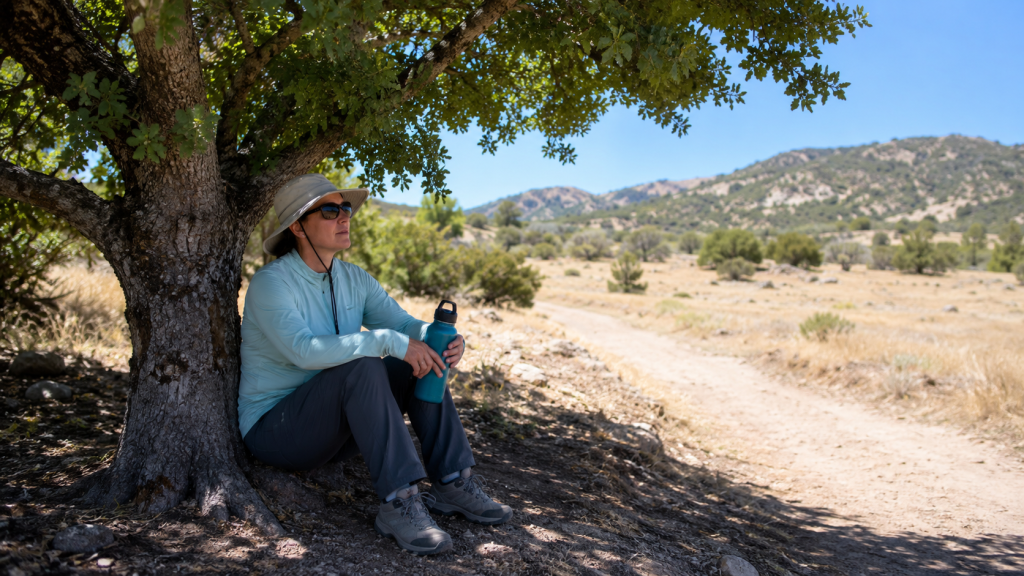
Shade can help reduce direct UV exposure, particularly during the middle of the day. Trees, umbrellas, covered patios, and canopies can all provide protection.
UV rays are often strongest between approximately 10 a.m. and 4 p.m. When possible, schedule extended outdoor activities earlier in the morning or later in the afternoon.
Keep in mind that UV rays can reflect off water, sand, pavement, and snow, so protection may still be necessary while sitting in the shade.
Check the UV Index
The UV Index forecasts the expected strength of ultraviolet radiation in your area. The scale typically ranges from 1 to 11 or higher—the higher the number, the greater the potential for skin and eye damage.
Check the daily UV Index through a trusted weather website or application before planning outdoor activities.
Do Not Rely on Cloud Cover
Cloudy or cool weather does not eliminate UV exposure. UV rays can still reach your skin when the sky is overcast, and sun damage can occur even when the temperature feels comfortable.
Daily protection is important during every season, including fall and winter.
Avoid Indoor Tanning
Tanning beds and sunlamps expose the skin to artificial UV radiation. A tan is not a sign of healthy skin—it is evidence that the skin has been injured.
Avoiding indoor tanning is an important part of reducing your UV exposure and skin cancer risk.
Know Your Skin
UV Safety Month is also a good reminder to become familiar with your skin.
Check your skin regularly for:
- New or unusual growths
- Sores that do not heal
- Spots that change in size, color, shape, or texture
- Moles with irregular borders
- Areas that itch, bleed, crust, or become painful
Contact a qualified healthcare professional or dermatologist if you notice a new or changing spot or have concerns about your skin.
Make UV Safety a Daily Habit
Sun protection does not need to be complicated. Keep sunscreen near your keys, in your purse, or with your outdoor supplies. Place sunglasses and hats where they are easy to grab, and encourage children and family members to follow the same routine.
During UV Safety Month, take a few moments to evaluate your current sun-protection habits. A little preparation can help protect your skin and eyes while allowing you to safely enjoy the outdoors.
Protect your skin. Protect your eyes. Practice UV safety every day.