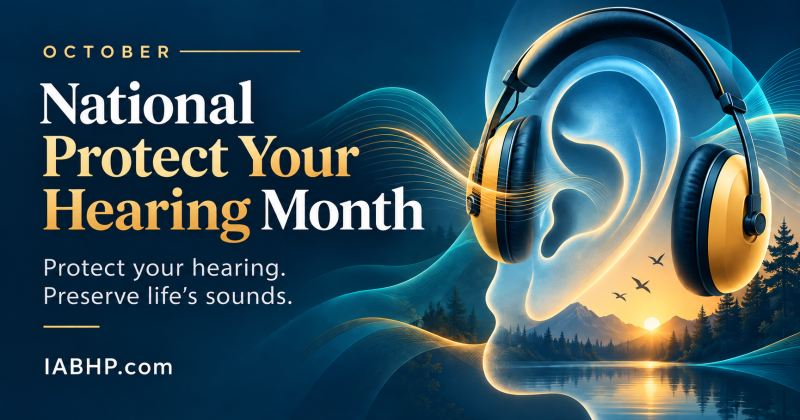
National Protect Your Hearing Month
Observed During: October, 2027
2027 observance: October 1–31, 2027.
Date rule: October 1–31 each year (fixed dates).
Verification source: NIH NIDCD.
National Protect Your Hearing Month: Protect the Sounds That Matter
The voices of loved ones, a favorite song, birds singing outside—hearing helps us connect with the world around us. October is National Protect Your Hearing Month, an opportunity to raise awareness about noise-induced hearing loss and the everyday steps we can take to protect our ears.
Noise exposure can happen at work, at home, and during activities we enjoy. This month encourages everyone to pay attention to the sounds around them and make hearing protection part of their wellness routine.
How Noise Can Damage Hearing
Loud sounds can damage delicate sensory hair cells inside the inner ear. In humans, these cells do not grow back once destroyed, so the resulting hearing loss can be permanent. Damage may develop gradually from repeated exposure or occur immediately after an intense sound, such as an explosion.
The risk depends on both how loud a sound is and how long you hear it. Long or repeated exposure to sounds at or above 85 A-weighted decibels (dBA) can cause hearing loss. As sound levels increase, damage can happen in less time. Loud music, lawn equipment, power tools, and recreational activities can all contribute to harmful exposure.
A practical warning sign: if you need to shout to be heard by someone nearby, the environment may be loud enough to damage your hearing.
Everyday Ways to Protect Your Hearing
Small changes can help reduce your exposure to harmful noise:
- Lower the volume. Keep music, television, and personal listening devices at a comfortable level.
- Wear hearing protection. Use properly fitted earplugs or protective earmuffs during loud activities.
- Move away from the noise. Increase your distance from speakers, machinery, and other loud sound sources.
- Take quiet breaks. Step away from noisy environments to reduce the length of your exposure.
- Protect children’s ears. Help children recognize loud environments and use appropriate hearing protection.
Keep hearing protection somewhere convenient, such as near your lawn equipment or in the bag you take to concerts and sporting events. Planning ahead makes it easier to protect your ears when you need to.
Pay Attention to Changes in Your Hearing
Noise-related hearing loss may make speech sound muffled or make conversations harder to follow. Loud noise can also cause tinnitus—a ringing, buzzing, or roaring sound in the ears. If you notice changes in your hearing or persistent tinnitus, contact a healthcare professional and ask about a hearing evaluation.
Sudden hearing loss requires immediate medical attention. Do not assume a rapid change in hearing is simply earwax or congestion; prompt evaluation matters.
Make Hearing Health Part of Workplace Wellness
Employers can support hearing health by assessing noise exposure, reducing noise at its source, teaching employees how to use hearing protection, and monitoring workers for hearing changes. A quieter workplace also helps employees hear alarms, instructions, and other important signals.
For National Protect Your Hearing Month, consider inviting a hearing care professional to an employee wellness fair, sharing hearing protection tips, or offering a demonstration on fitting earplugs correctly.
Protecting your hearing starts with paying attention today. Turn down the volume, prepare for loud activities, and encourage your family and coworkers to do the same.
Explore more wellness observances and employee health resources at IABHP.com.
Search Workshops Search Providers
Links Share a Link
No Links Yet, Share a Link Today!
Promotions Share a Promotion
No Promotions Yet, Share a Promotion Today!